
About the Stag
Stag history
From a Michelotti styling exercise to Triumph's V8 grand tourer, 1965 to 1977.
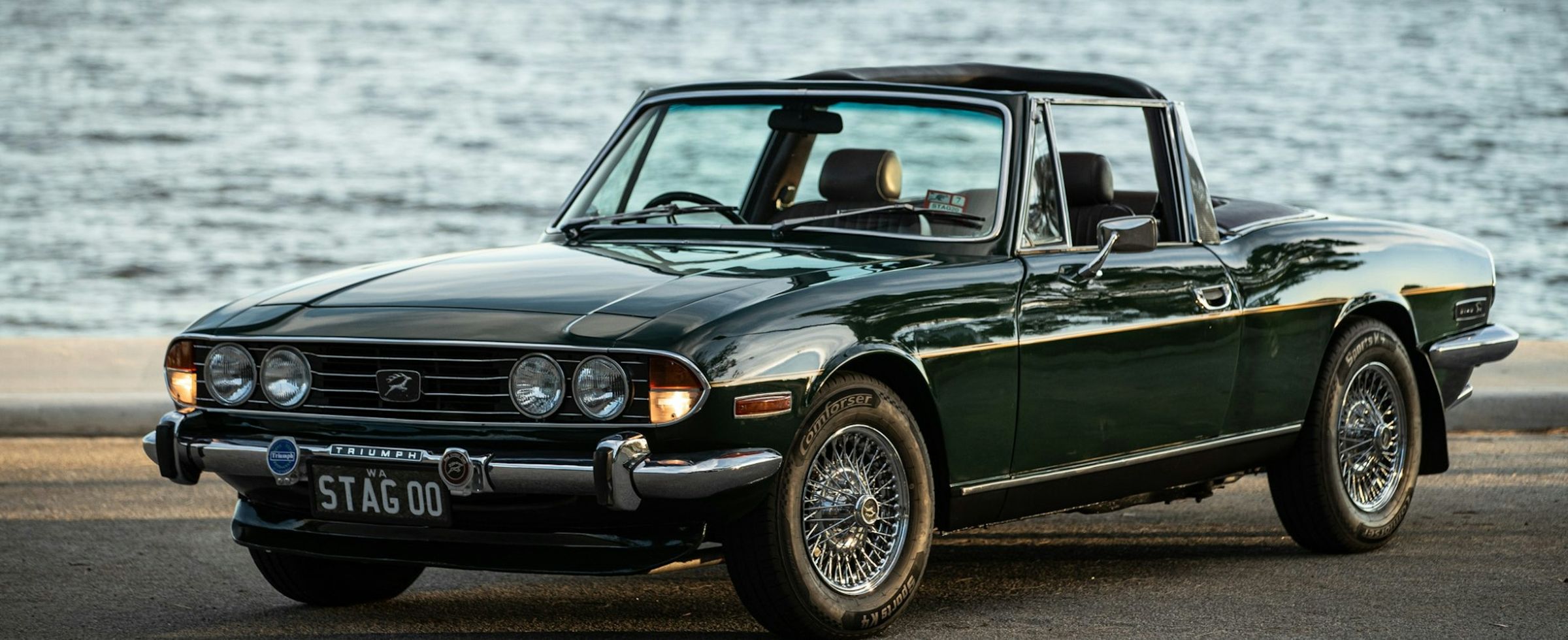
Few cars are truly in a class of their own. The Stag is a four-seat convertible with a V8, styled in Italy, at a fraction of the price of the Mercedes that was its nearest rival. It's also the only Triumph that kept its development codename all the way into the showroom.
Design
A styling exercise that became a car
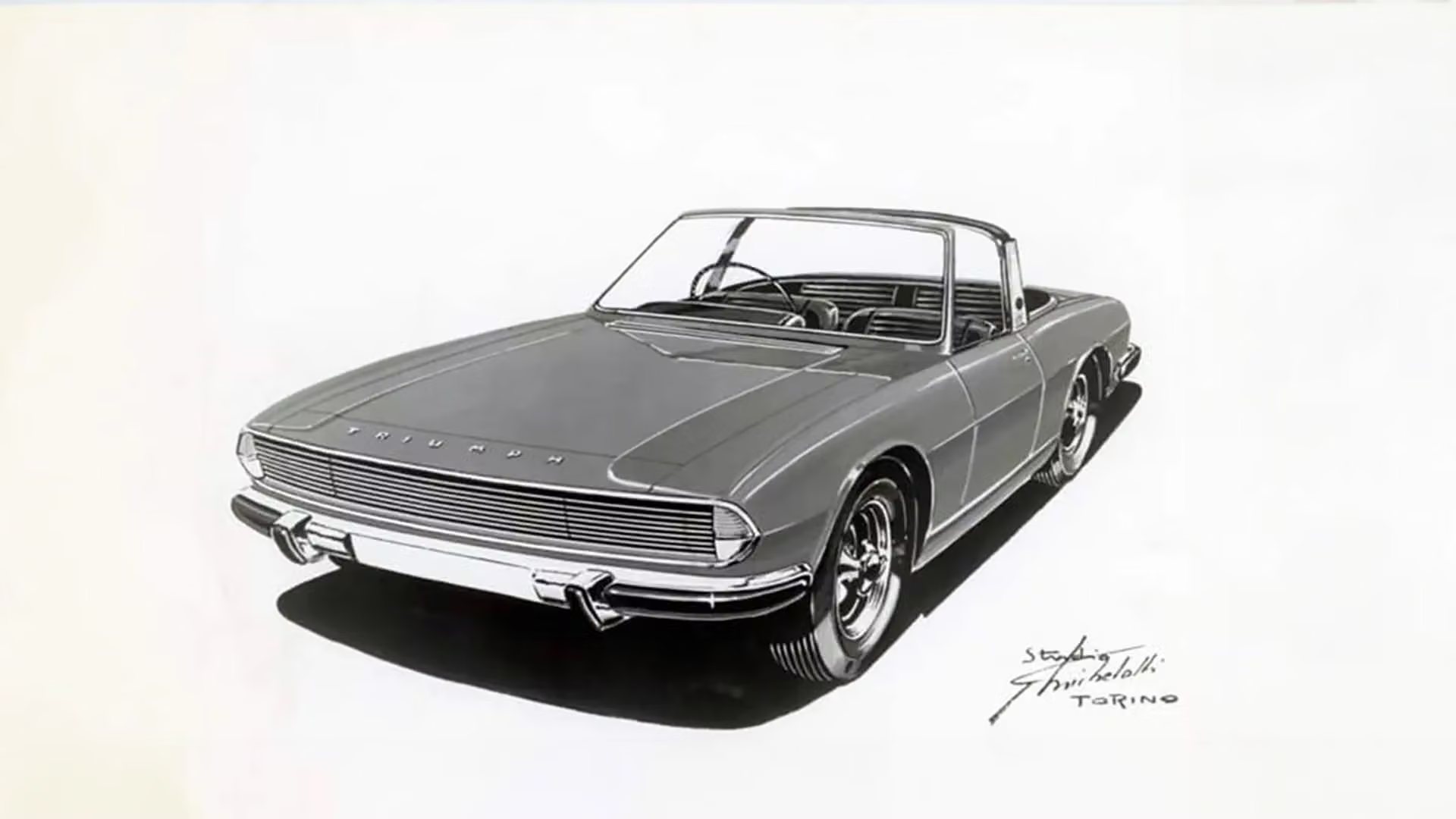
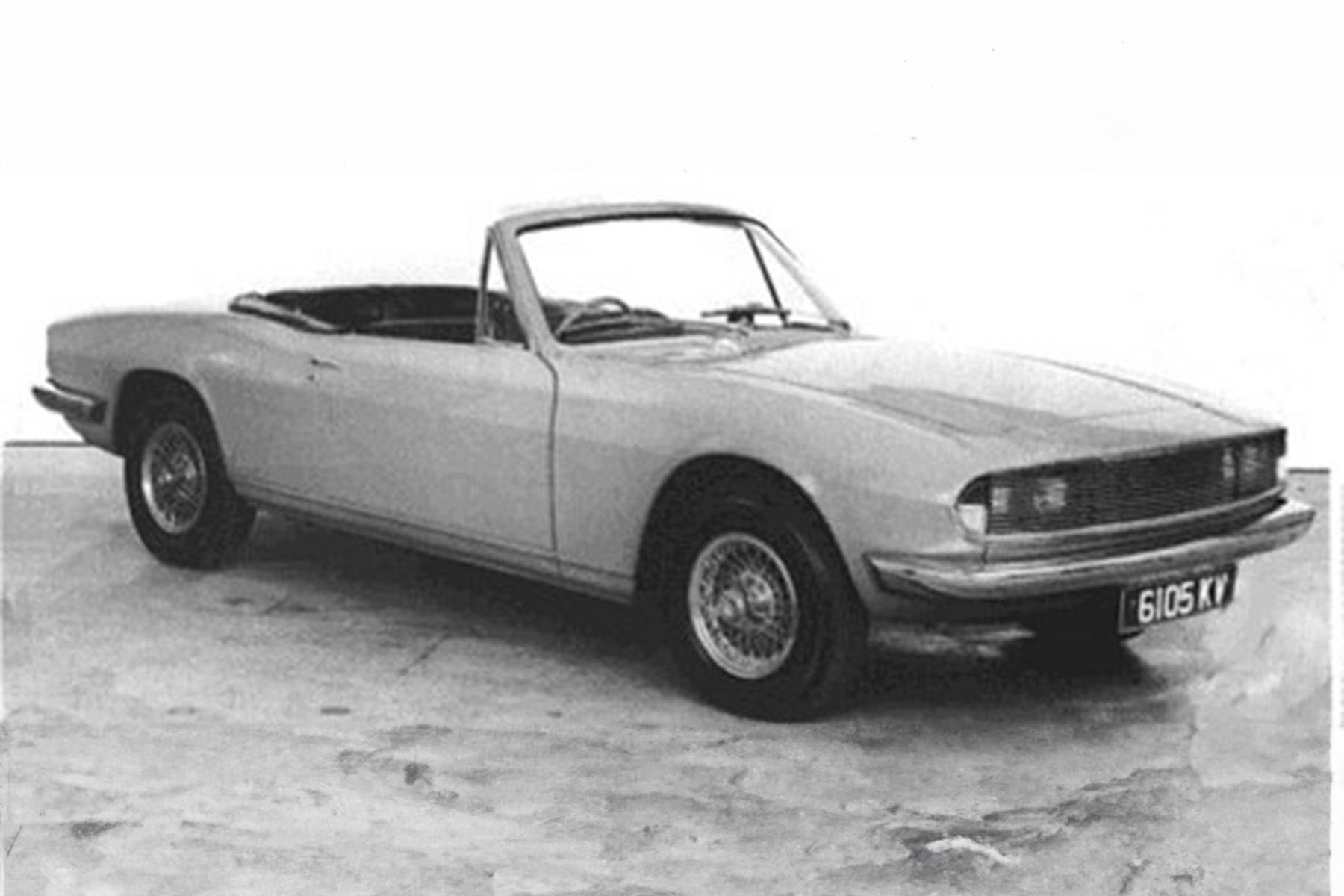
In 1965 Triumph sent one of its new 2000 saloons, which Giovanni Michelotti had also styled, to his studio in Turin. The brief was loose: see what you can do with it. Michelotti cut it down into an elegant open car on a shortened floorpan.
Triumph's engineering director Harry Webster liked it enough to bring it back to England and put it to the board. It was approved as a project codenamed Stag, and the name never changed.
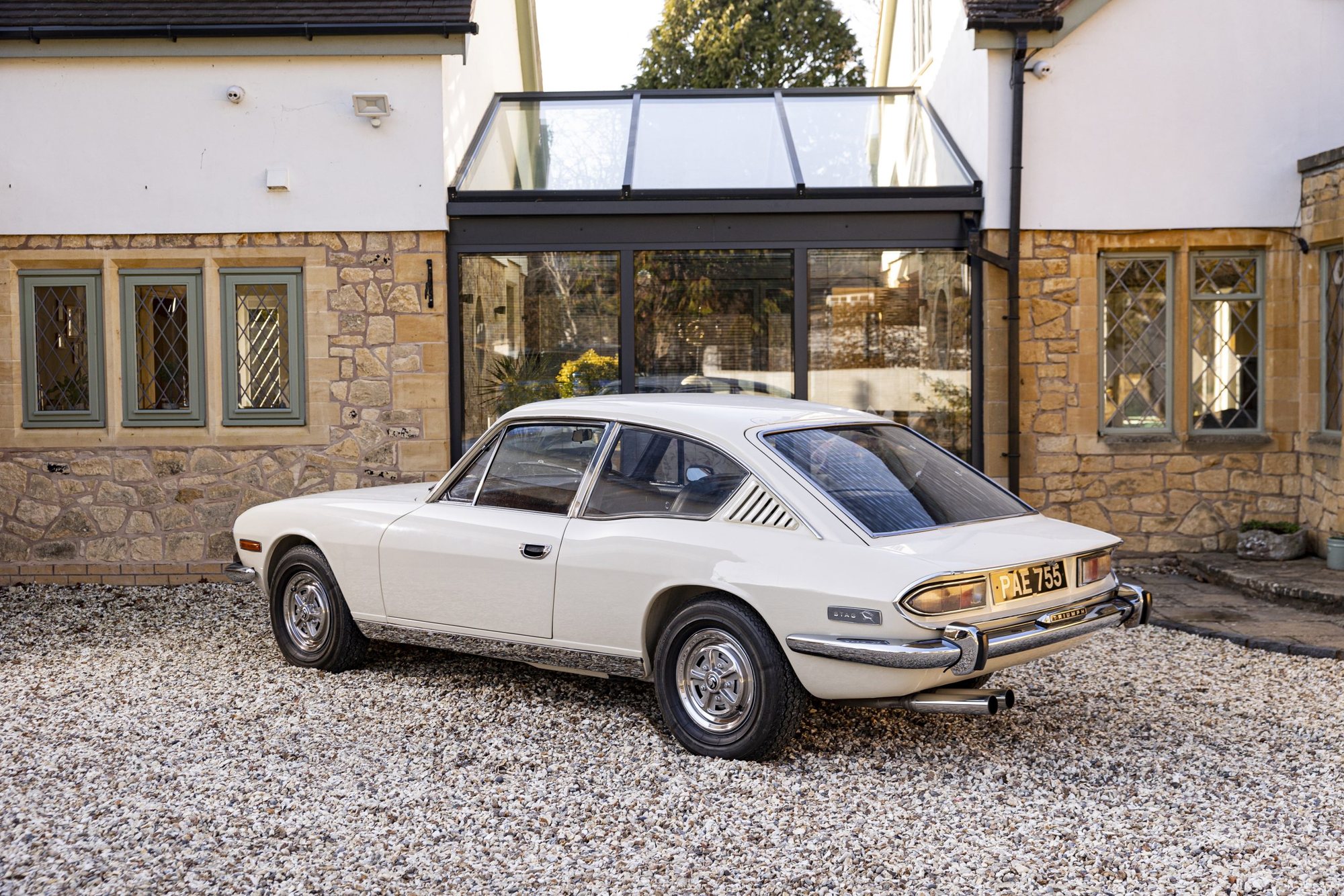
The engineers added a T-bar roll-over hoop tied to the screen frame, partly for stiffness and partly with American safety rules in mind. Michelotti reportedly wasn't fond of it, and put extra care into the steel hardtop instead. In 1968 he also drew a fastback coupé version; one was built in 1970 but it never went into production.
The engine
A V8 of its own
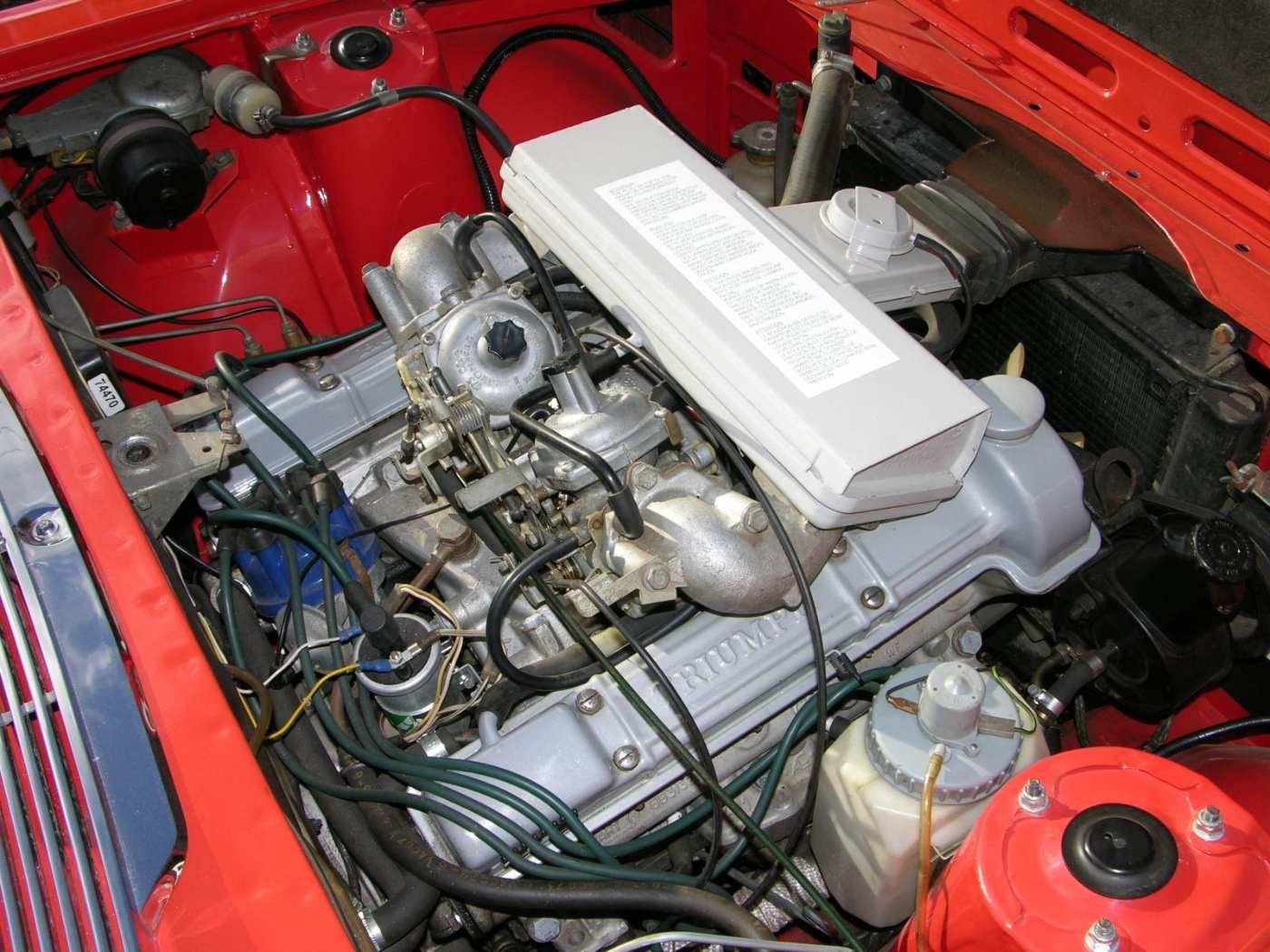
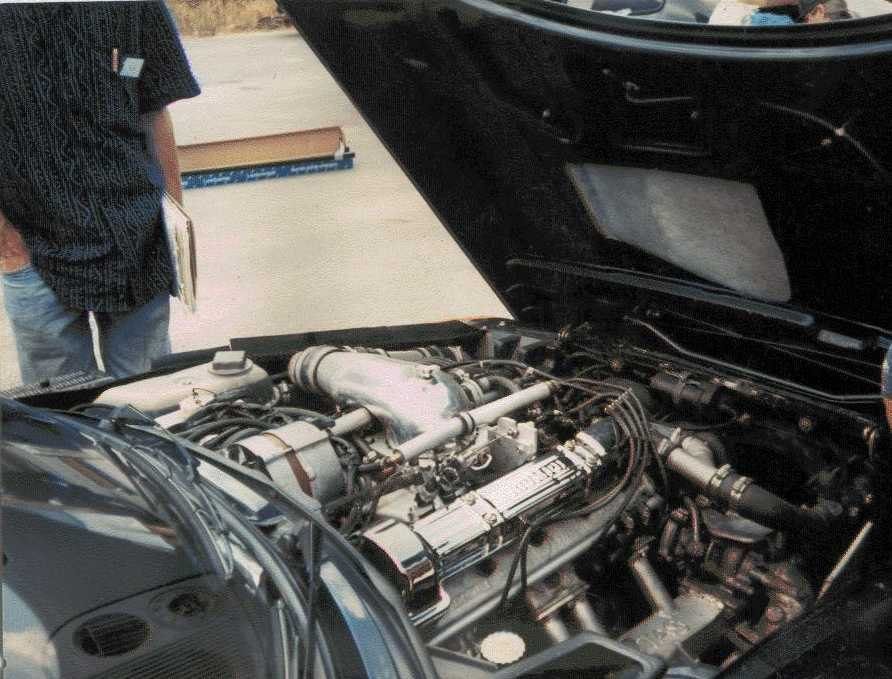
The plan was for the Stag to use the six-cylinder engine from the 2000. But in 1963 Lewis Dawtrey, who designed Triumph's new slant-four, had seen that two of them on a common crank would make a compact V8, and that's what the Stag got.
It began as a 2.5 litre with Bosch fuel injection. After Leyland took over Rover in 1967, and with the injection giving trouble, Spen King switched to twin Zenith-Stromberg carburettors and enlarged the bore to make 3.0 litres and 145 bhp. Rover's own V8 had been tried in the car and was too tall to fit without changing the front structure.
The Stag was the only car ever to use the Triumph V8. A Triumph 3000 saloon with it was dropped so as not to compete with Rover's 3500, and Morgan, offered the engine, chose the Rover V8 instead.
June 1970
Launched, nearly two years late
The Stag went on sale in June 1970 at £1,995 before the hood, hardtop and overdrive were added. Testers loved the looks, the smooth V8 and the long-legged cruising, and it was less than half the price of a Mercedes 230SL, which only seated two. A twelve-month waiting list formed, and some cars changed hands above list price.
"Here's a four seater convertible with a V8 under the bonnet. If you want to take four people al fresco in a hurry, with a wonderful V8 soundtrack, the Stag is your only option."
The Mk2
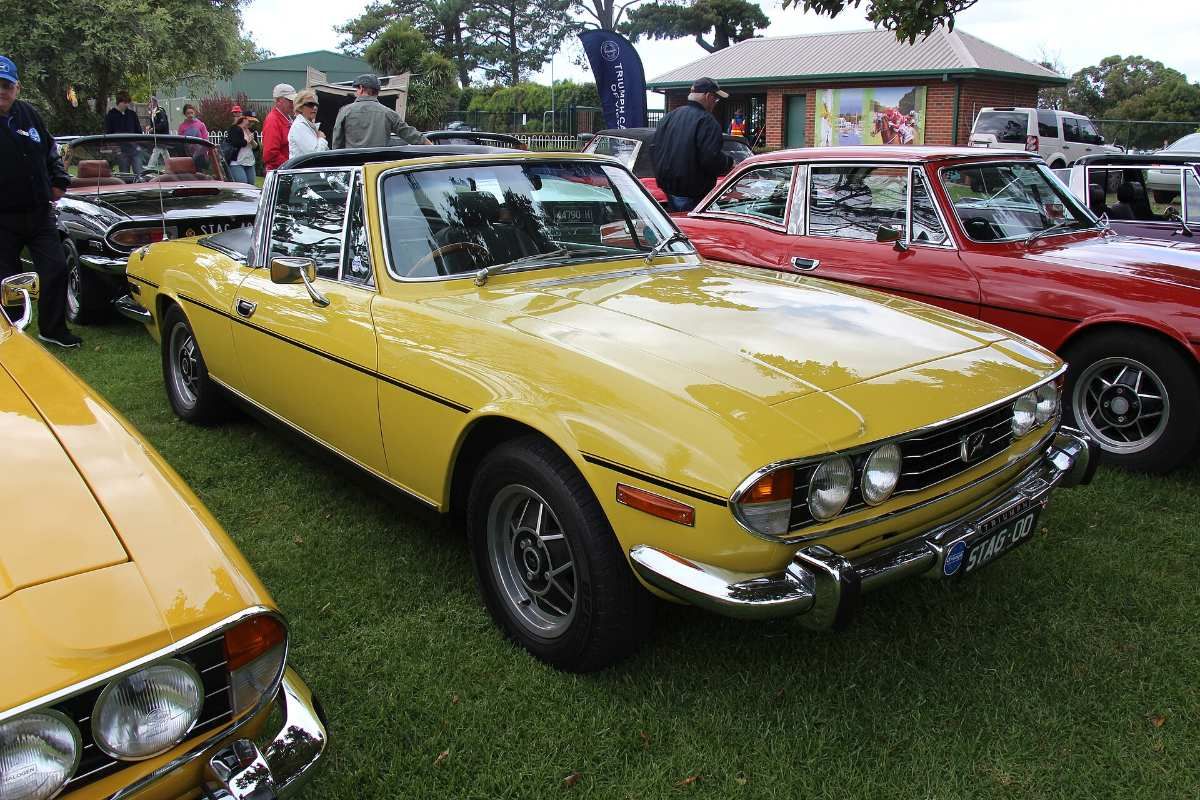
Built from October 1972 (commission number LD20001) and on sale early in 1973, the Mk2 got revised heads and valves, overdrive as standard on manual cars, a stronger mohair hood without the rear quarter windows, black grille and badge backgrounds, matt black sills and tail panel, twin coachlines, a single courtesy light in the T-bar, upward-pointing gauge needles and a smaller steering wheel.
America
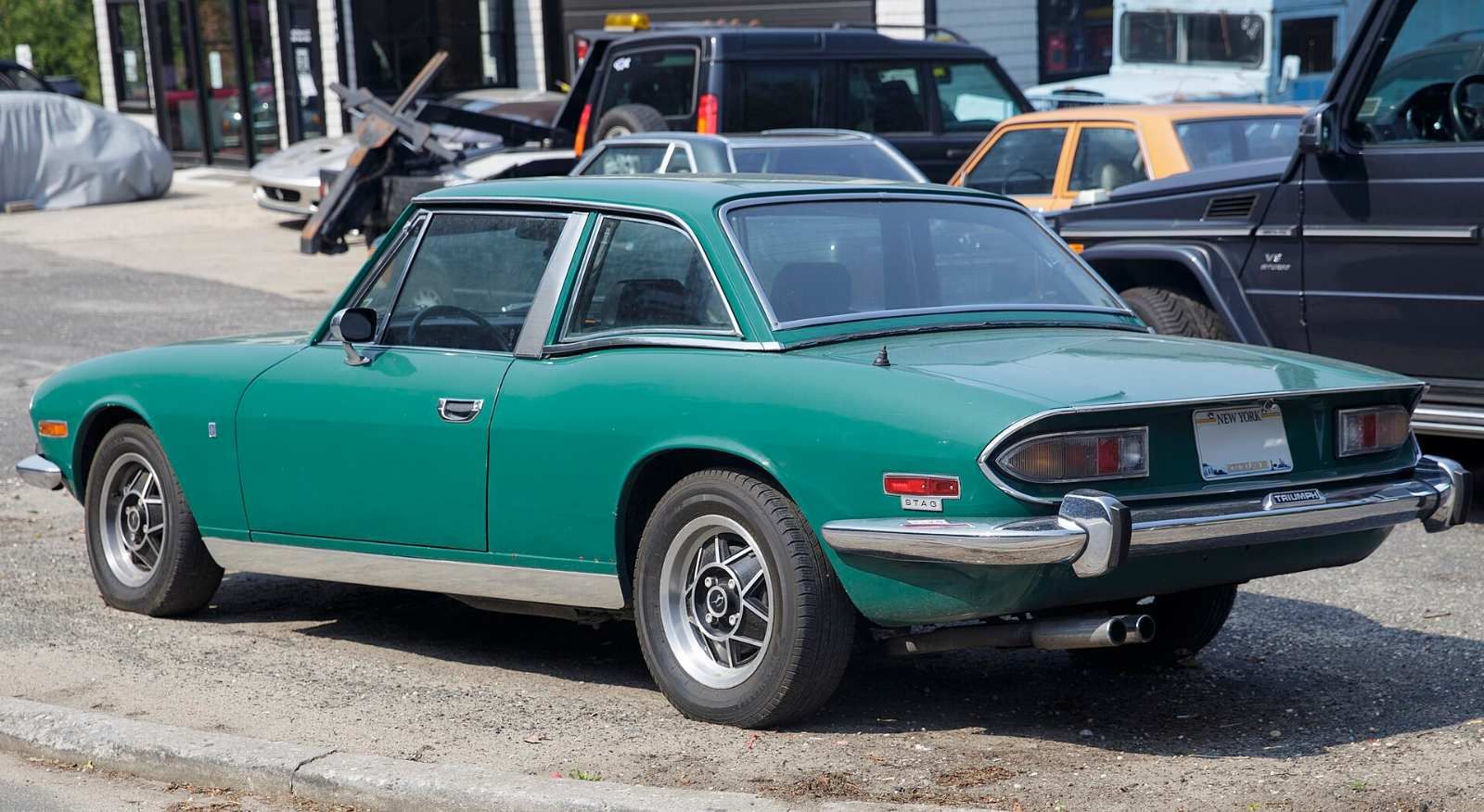
Triumph sold most of its sports cars in the United States and hoped the Stag would follow. It arrived there in 1971 with lower compression, emission controls, side marker lights and about 127 bhp, plus wire wheels on early cars. Automatics and air conditioning made the cooling problems worse in American heat. Only 2,871 went to the US before the Stag was withdrawn in July 1973.
Reputation
Why the Stag got a bad name
The car arrived as British Leyland was running short of money, with strikes hurting build quality. The V8 earned a reputation for overheating, and some owners called it the "Triumph Snag". Most of it came down to a handful of design quirks and a lot of neglect.
Looked after, a Stag is as dependable as anything of its age. Almost every part is available, specialists know the engine inside out, and the fixes are well understood.
The water pump
Sits high in the engine, so a small coolant loss can leave it pumping air. Early pump gears could wear out.
Coolant
Aluminium heads on an iron block need inhibited coolant all year. Without it, corrosion silts up the radiator.
Timing chains
Single-row chains stretch. Left too long they can jump a tooth and let valves hit pistons. Change them every 30,000 miles or so.
Head studs
Half the studs are angled, so heat can make heads warp and studs seize. Gaskets suffer if it overheats.
Down under
Stags in Australia
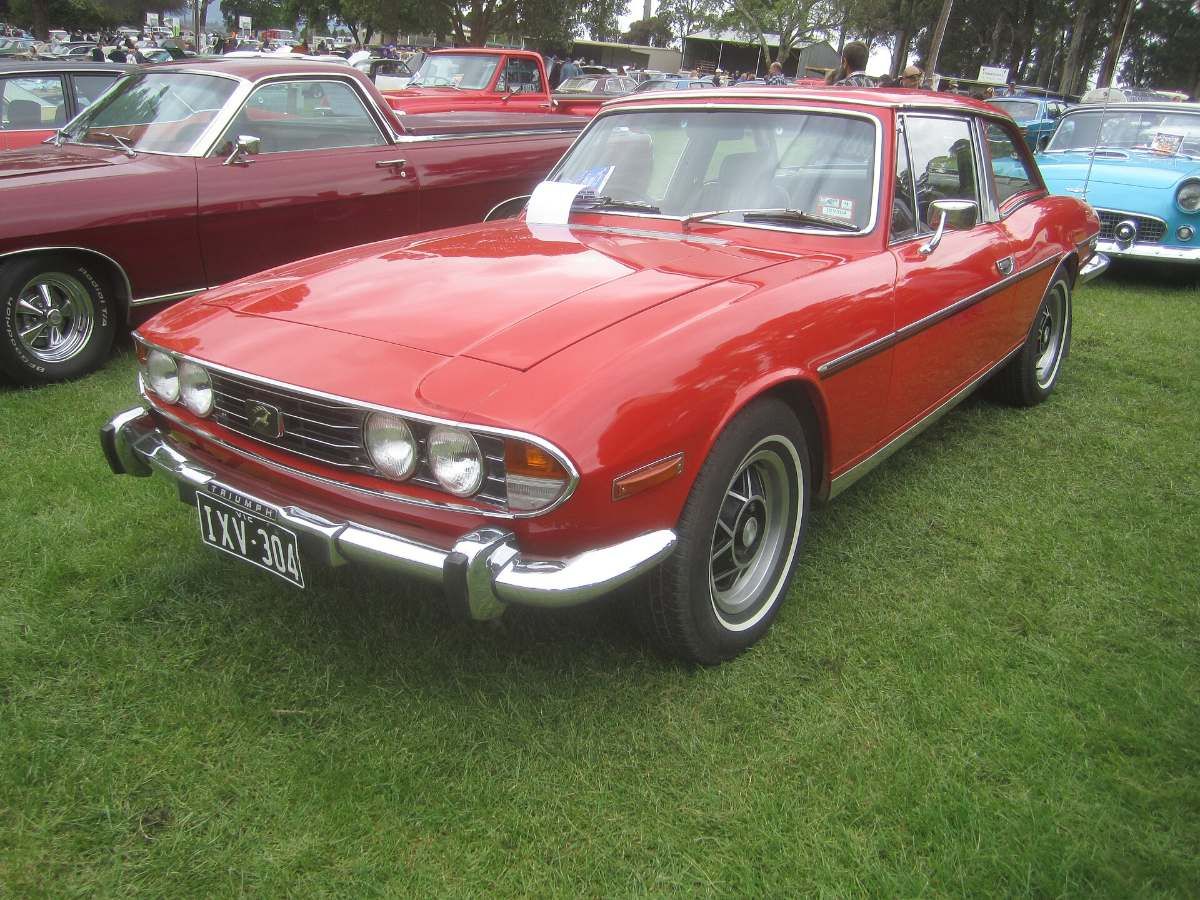
Stags reached Australia in the early 1970s, slowly at first because stock was short. Australian cars came with the hardtop as standard, along with power steering, electric windows and the wood-grain dash. 1,596 were sold new here.
The late John Powell's Australian National Triumph Stag Register kept growing as owners wrote in and John chased the state registration departments through Freedom of Information requests. His last update, in December 2022, listed 1,665 Stags: 527 fully documented, 95 with a named owner but few details, 1,029 known only by commission number, and 14 exported.
Of the 1,651 Australian cars on that list, 991 were still registered: a survival rate of 60.0 per cent, up from 55.1 per cent in mid-2021. In June 2021, 1,023 cars on the register still had a Triumph V8, about four in five of those whose engine was known. The Leyland P76 4.4 was the most common swap, in 90 cars. See John's analysis.
On screen
Stags in film and TV
1971
Diamonds Are Forever
James Bond takes a Saffron Yellow Stag from a diamond smuggler.
1971
Straw Dogs
A pre-production Stag is Dustin Hoffman's car.
1978 to 1979
Hazell
The TV detective drives a 1975 Mk2.
1981 to 1991
Bergerac
A yellow Stag in Jersey.
2000 to 2001
Second Sight
Clive Owen's DCI Ross Tanner drives a Sapphire Blue Stag.
2003 to 2015
New Tricks
Gerry Standing's British Racing Green 1974 Stag.
2018
A Very English Scandal
Hugh Grant, as Jeremy Thorpe, in a white Stag.
2024
The Grand Tour
In the finale, James May's Stag crosses Zimbabwe and Botswana and is the only car without a breakdown.
Spotted at home
Stags on Australian screens
John Powell went through the Internet Movie Cars Database and found Stags in all of these. He added them to the register, but none of the plates turned up on any state transport list and no owner ever said "that's mine", so he decided the cars were real and the plates were props, and took them off again.
- A Country Practice
- Blue Heelers
- Bluey
- Cops
- E Street
- The Flying Doctors
- Freedom
- Good Guys Bad Guys
- Home and Away
- Homicide
- The Journalist
- Packed to the Rafters
- Prisoner
- Puberty Blues
June 1977
The last Stag
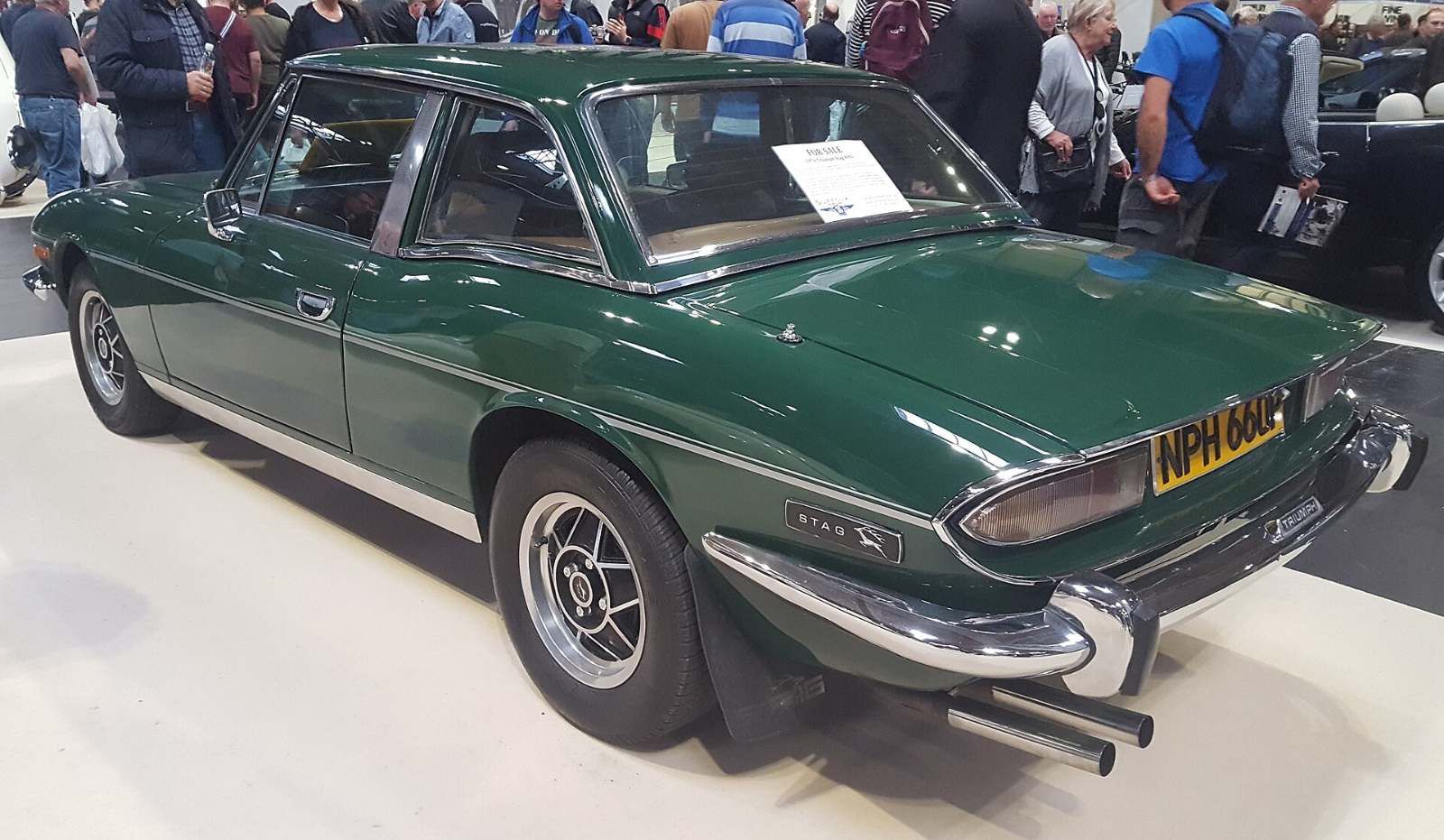
Production ended in June 1977 at commission number LD45722. The figure most often quoted is 25,939: 17,819 sold in Britain and 8,120 exported, including 2,871 to the US. Some factory figures give 25,877.
The very last car, BOL 88V, is kept by the British Motor Museum at Gaydon. A replacement codenamed Lynx, a longer, four-seat TR7 with the Rover V8, was planned for 1978 and cancelled when Speke closed.
Speke, in Liverpool, was where every Stag body was built, painted and trimmed before going to Canley in Coventry for final assembly.
1965 to 1977
Stag milestones
-
1965
A Triumph 2000 saloon goes to Giovanni Michelotti in Turin for a styling exercise.
-
1966
Harry Webster takes the open-top design to the board. The project, codenamed Stag, is approved.
-
May 1967
A Rover V8 is tried in the car and found too tall. Triumph sticks with its own engine.
-
October 1967
First prototypes assembled for endurance testing.
-
1968
Leyland and BMC merge into British Leyland. The V8 grows from 2.5 to 3.0 litres and fuel injection gives way to twin Strombergs.
-
June 1970
The Stag goes on sale at £1,995 basic, before the hood, hardtop or overdrive. A twelve-month waiting list forms in Britain.
-
March 1971
Better hood catches, the bonnet release moves to the left and the fuel tank gets bigger.
-
Mid 1971
US launch, with lower compression, emission controls, side markers and about 127 bhp.
-
November 1971
"Sanction 2" cars begin at LD10001.
-
January 1972
Uprated cooling: a separate expansion tank at 20 psi, a U hose from the thermostat housing to the pump, and a cold-air intake.
-
October 1972
Overdrive becomes standard on manual cars.
-
Early 1973
The Mk2 goes on sale. Built from LD20001 in October 1972, it brings revised heads, J-type overdrive (from LD21231), black sills and tail panel, coachlines, new instruments and a smaller wheel.
-
July 1973
The Stag is withdrawn from the United States.
-
Late 1973
Strikes, the oil crisis and Britain's three-day week make big-engined cars a hard sell.
-
January 1974
A mohair hood with cream lining, seat belt and hazard warning lights, and tufted carpets.
-
October 1975
From LD40001: stainless sill covers, a body-colour tail panel, and alloys and tinted glass standard.
-
1976
A redesigned handbrake, a push-button trip reset, and tyres down from 185 to 175 section.
-
October 1976
The Borg-Warner 65 automatic replaces the 35 from LD41994.
-
June 1977
Production ends at LD45722 on 24 June, after 25,939 cars.
1970 to 1977
How many were built
The factory's figures, year by year. Australian cars are in the export columns.
| Britain | Export | |||
|---|---|---|---|---|
| Year | Manual | Auto | Manual | Auto |
| 1970 | 358 | 342 | 30 | 10 |
| 1971 | 1,291 | 699 | 1,221 | 690 |
| 1972 | 2,015 | 1,490 | 432 | 567 |
| 1973 | 1,511 | 1,683 | 1,138 | 1,176 |
| 1974 | 1,327 | 1,279 | 405 | 431 |
| 1975 | 935 | 1,051 | 440 | 472 |
| 1976 | 2,466 all types | 644 all types | ||
| 1977 | 501 | 871 | 112 | 352 |
| Total | 17,819 | 8,120 | ||
25,939 in all, built from 14 November 1969 to 24 June 1977. Of the 8,120 exported, 2,871 went to the US and 1,596 were sold new in Australia. In Britain, 8,369 were still licensed or declared off the road in 2023, about 47 per cent of those sold there.
Sources The original triumphstag.info and Stag Owners Club milestones; Classic & Sports Car's Stag buyer's guide; the Vintage Triumph Register; Wikipedia's Triumph Stag and Triumph V8 articles; Shannons Club (David Burrell, 2021) for John Powell's register figures; the factory production figures and UK survival figures (DVLA, 2023) as published by The Stag Archive; Drive (Tony Davis) for the Australian launch. Where sources disagree we've said so.