
About the Stag
Stag specs
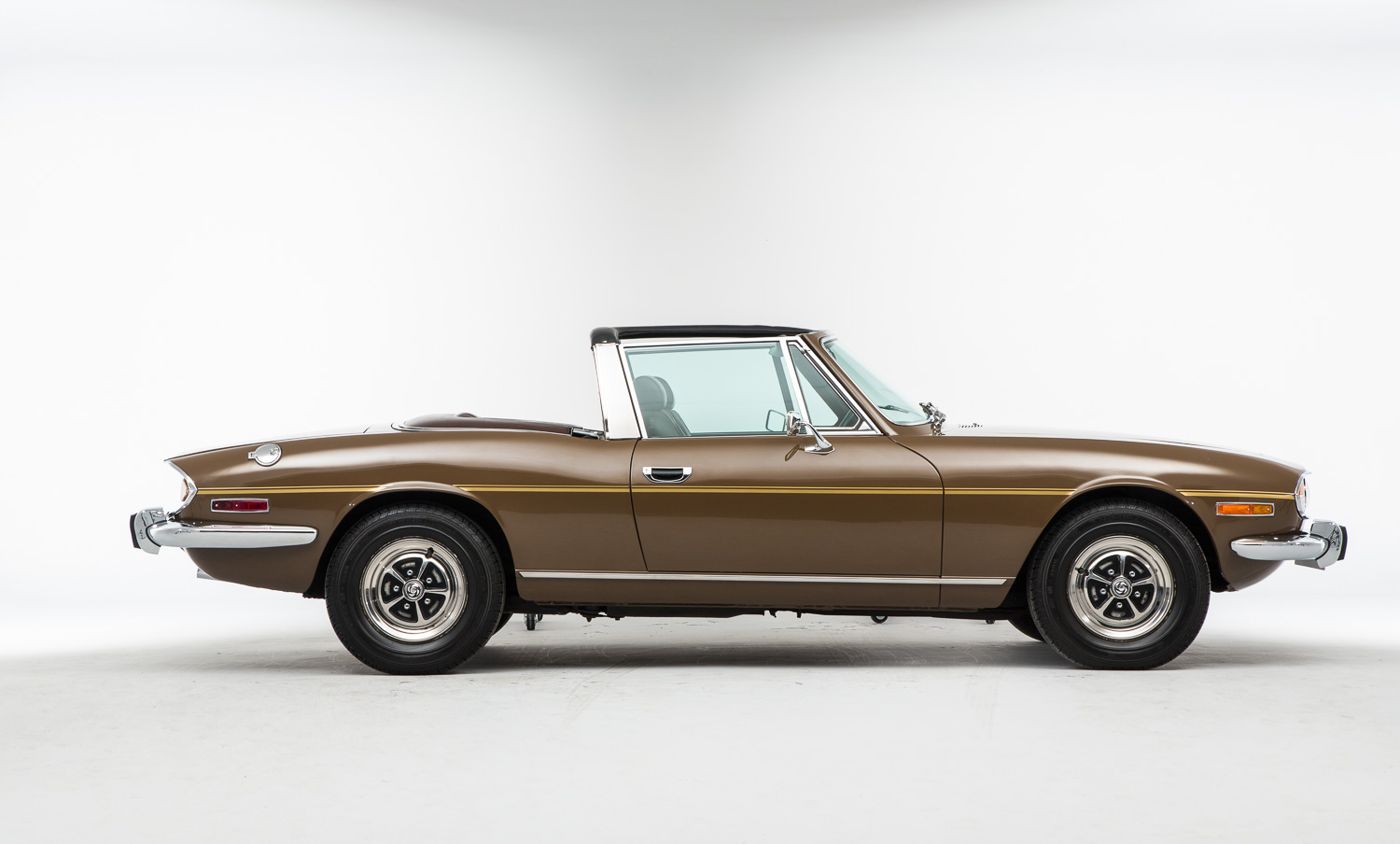
Designed by Giovanni Michelotti. 25,939 built from 1970 to 1977.
Mk1 and Mk2
Four Stags
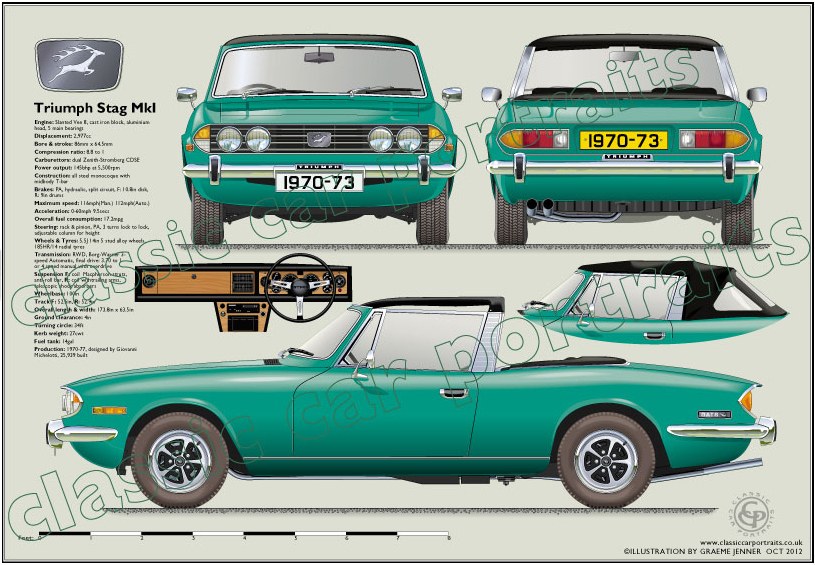
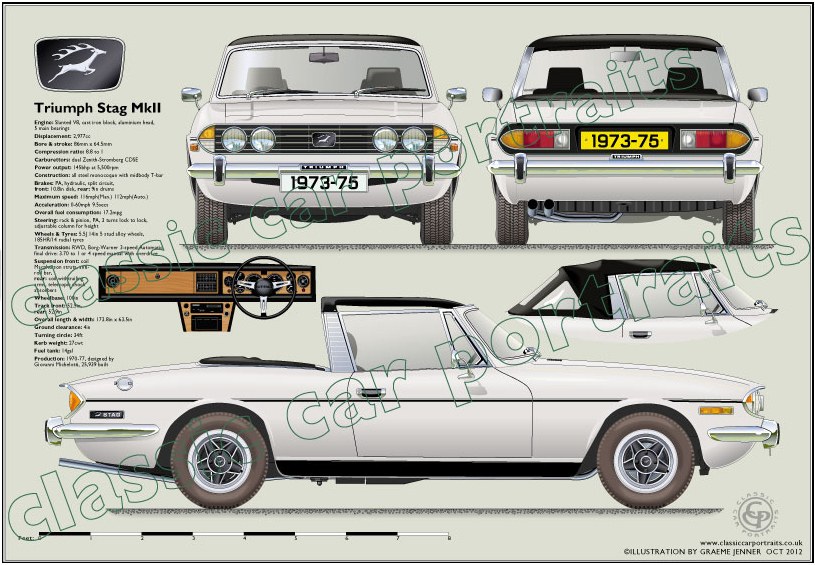
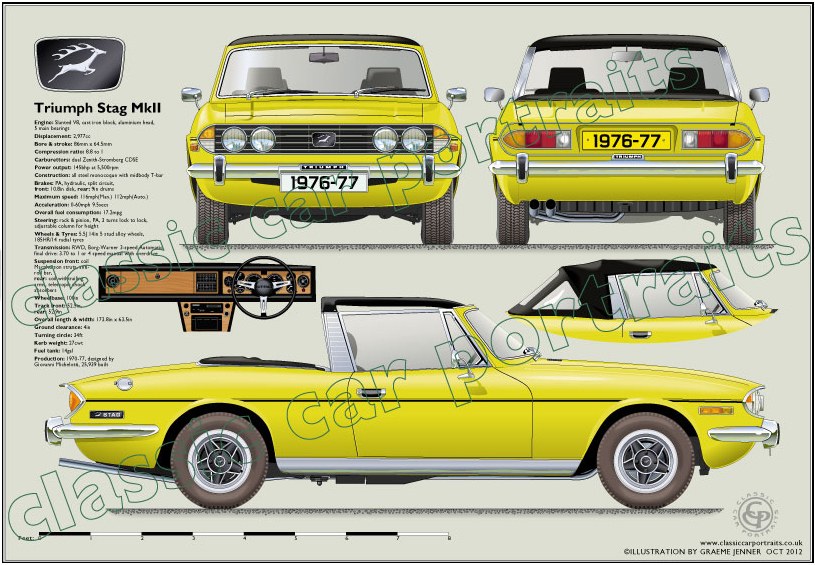
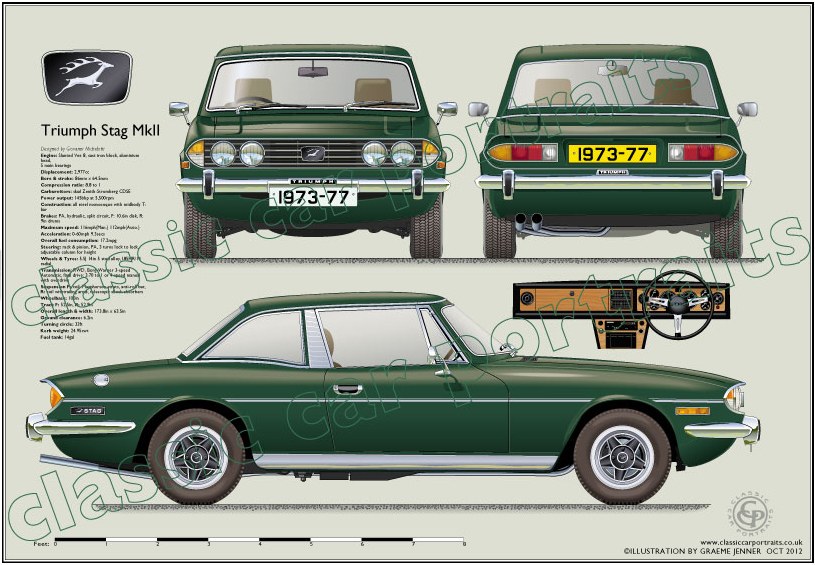
The Stag barely changed in seven years. Here's how to tell them apart. Triumph never called them Mk1 and Mk2; owners came up with the names later, so you'll see the line drawn in slightly different places.
Inside the Stag
3D cutaway, Mk2
Tap a number to see what's there.
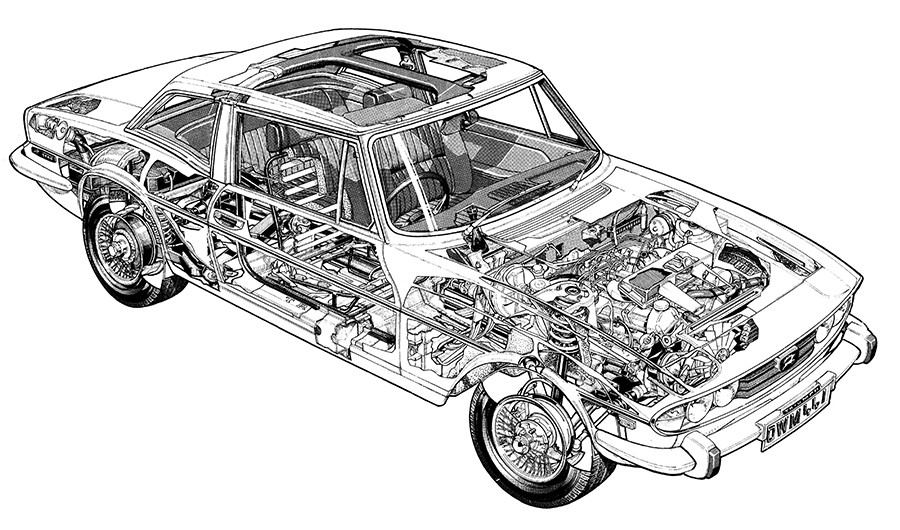
Mk2 cutaway drawing, from the original triumphstag.info.
Specifications
The numbers
For UK and Australian cars as tested when new. US cars had lower compression and about 127 bhp. Sources differ by a few per cent; these are the commonly quoted figures.
Configuration
- Front engine, mounted lengthwise, gearbox in line, rear-wheel drive
- 2+2 seat, two-door luxury tourer
- Soft top, with a removable steel hardtop
- All-steel monocoque with a T-bar roll-over hoop
Engine
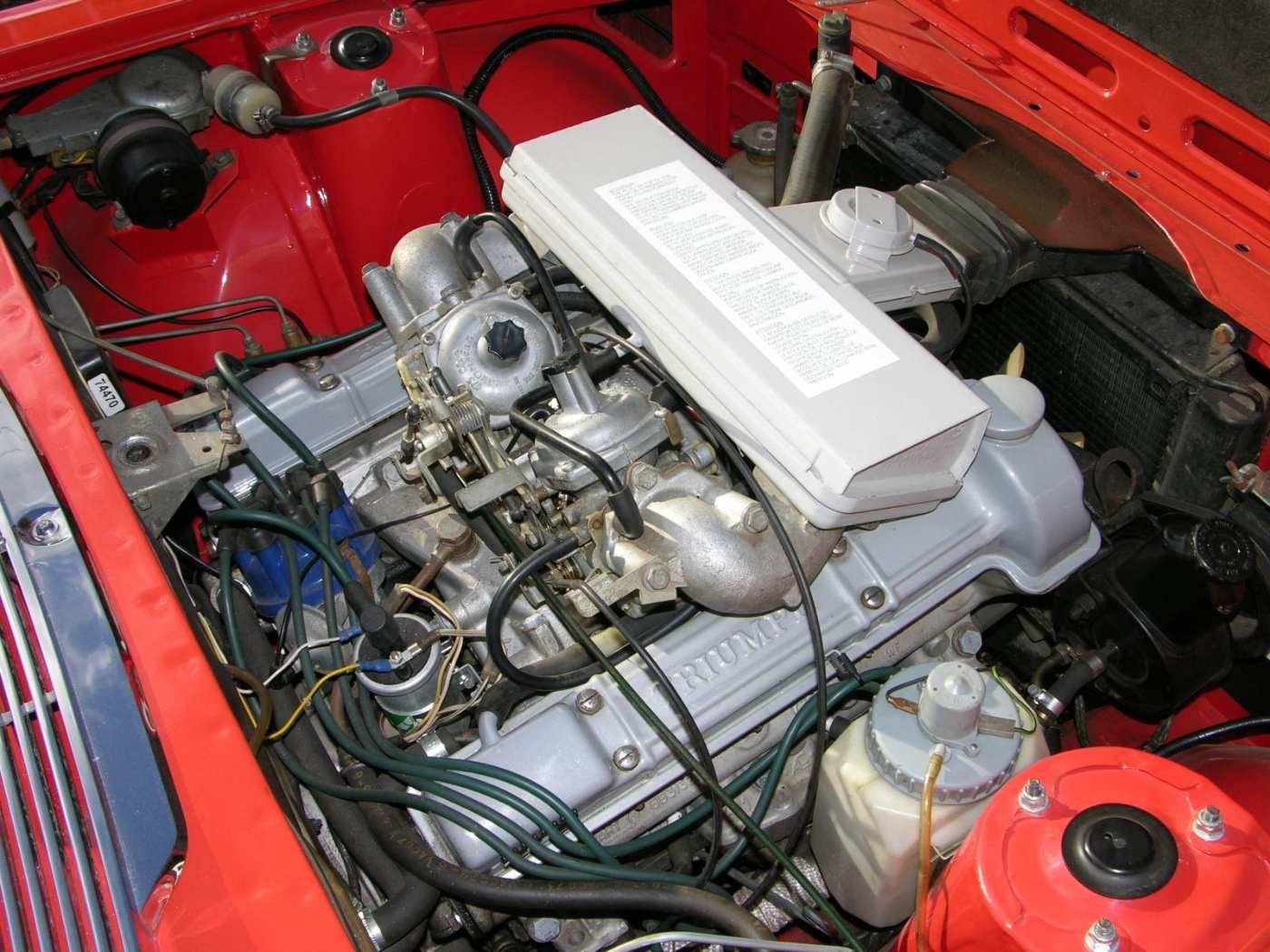
- Triumph V8, 90 degree vee, 2,997 cc (182.9 cu in)
- Bore 86 mm, stroke 64.5 mm (oversquare)
- One overhead camshaft per bank, chain driven, 16 valves
- Cast iron block, five main bearings, aluminium heads
- Compression 8.8:1 (lowered for US cars)
- Twin Zenith-Stromberg 175 CDSE carburettors
- 145 bhp (108 kW) at 5,500 rpm
- 170 lb ft (230 Nm) at 3,500 rpm
Chassis
- Front: MacPherson struts, coil springs, anti-roll bar
- Rear: independent semi-trailing arms, coil springs, rubber-insulated subframe
- Power-assisted rack and pinion, about 3 turns lock to lock
- Steering column adjustable for reach and rake
- Servo brakes, split circuit: 270 mm discs front, 228 mm drums rear
Gear ratios
| First | 2.995 |
| Second | 2.100 |
| Third | 1.386 |
| Fourth | 1.000 |
| Overdrive third | 1.100 |
| Overdrive fourth | 0.797 (J-type) |
| Reverse | 3.369 |
| Final drive | 3.70 |
| First | 2.39 |
| Second | 1.45 |
| Third | 1.00 |
| Reverse | 2.09 |
| Final drive | 3.70 |
Manual: a strengthened four-speed with a 9 inch diaphragm clutch. Overdrive on third and top was optional on early cars and standard on manuals from late 1972. About half of all Stags were automatics.
Dimensions and weight
| Length | 4,420 mm |
| Width | 1,613 mm |
| Height (hardtop) | 1,257 mm |
| Wheelbase | 2,540 mm |
| Front track | 1,330 mm |
| Rear track | 1,342 mm |
| Ground clearance | 157 mm |
| Turning circle | 10.4 m |
| Kerb weight | about 1,270 to 1,300 kg |
| Fuel tank | 63 litres |
Wheels and tyres
- Steel wheels with trims at launch; US cars of 1971 and 1972 had 72-spoke wires
- GKN five-spoke alloys: optional, then standard from late 1975
- 5½J x 14, four studs on 114.3 mm (4½ inch) PCD, 28 mm offset
- 185 HR 14 radials, 175 section from 1976
Equipment
- Power windows and power steering
- Smiths instruments in a walnut dash
- Fully reclining front bucket seats
- Lockable glovebox with parcel shelf
- Door courtesy lights and quad headlamps
- Hardtop with heated rear window
- Air conditioning optional (rare outside the US)
Performance
- Top speed about 185 to 190 km/h (115 to 118 mph)
- 0 to 100 km/h about 9 to 9.5 seconds (manual), 11.5 seconds (auto)
- Standing 400 m in 17 to 18 seconds
- About 13 to 14 litres per 100 km overall
Know your car
Commission numbers
Every Stag carries a commission number on a small plate riveted to the left-hand door pillar, where the door shuts. It starts LD (LE on US cars), and the plate also carries the paint and trim codes. The number tells you roughly when the car was built, and the letters after it say how it left the factory.
Look yours up in the Register, which carries on John Powell's Australian National Triumph Stag Register. Every car's page there reads its number for you.
-
LD1
Late 1969
Pre-production cars built at Canley from November 1969. On sale in June 1970
-
LD10001
November 1971
"Sanction 2" cars, with the revised cooling system on the way
-
LD20001
October 1972
First Mk2 built. On sale early in 1973
-
LD21231
1973
J-type overdrive replaces the A-type
-
LD40001
October 1975
Stainless sills, body-colour tail panel, alloys and tinted glass standard
-
LD41994
October 1976
Borg-Warner 65 automatic replaces the 35
-
LD45722
June 1977
The last Stag
The letters after the number
| O | Overdrive (the letter O, not a zero) |
| BW | Borg-Warner automatic, used until about early 1974 |
| A | Borg-Warner automatic, from about early 1974 |
| L | Left-hand drive (not US cars) |
| U | US car, from the 1972 model year |
| K | Right-hand drive with a km/h speedo: Australian cars from 1975 |
So LD45581AK is an automatic, Australian car with a km/h speedo, built in 1976 or 1977. The change from BW to A happened gradually over late 1973 and early 1974.
The number ranges
| 1 to 3900 | 1970 to 1971, early Mk1Sanction 1, including the 1970 pre-production cars |
| 10001 to 14158 | 1972, Mk1Sanction 2, with the uprated cooling |
| 20001 to 25443 | 1973, early Mk2Sanction 3: matt black sills and tail panel. Built from October 1972 |
| 30001 to 36714 | 1974 to 1975, Mk2Sanction 4 |
| 40001 to 45722 | 1976 to 1977, late Mk2Sanction 5: body-colour tail panel, stainless sill covers, alloys standard |
Triumph built the cars in batches called sanctions. Numbers between these ranges were never used, so a number that falls in a gap has usually been written down wrongly.
Where to find the numbers
- Commission number: plate on the left-hand door pillar, with the paint and trim codes.
- Engine number: LF, then the number, then HE (for example LF 11246 HE). Stamped at the back of the block between the distributor and the bellhousing; on roughly the first thousand engines, on a boss between the two rear spark plugs on the left bank. It's usually close to, but not the same as, the commission number.
- Body and trim numbers: two small plates on the front crossmember beside the left bonnet hinge, often painted over. They rarely match the commission number, so use them as a cross-check, not the car's identity.
For proof of how a car left the factory, the British Motor Industry Heritage Trust at Gaydon holds the build records and issues Heritage Certificates for a fee.
Chassis number changes from Classic & Sports Car's Stag buyer's guide and the Vintage Triumph Register. Number ranges, letters and plate locations from the Stag Owners Club magazine (March 2020) and The Stag Archive.
Photos
Every angle
One well-kept Stag, inside and out. Tap any photo to see it full size.
Photos: Fine & Classic, from the original triumphstag.info gallery.