
About the Stag
Triumph history
From Coventry bicycles to the Stag: the company behind the car, 1885 to 1984.
The Stag was built by a company with eight decades behind it, and one that had already been through bankruptcy, a world war and three takeovers by the time Michelotti put pen to paper.
-
1885 to 1902
Bicycles
Triumph began with Siegfried Bettmann, a young German who settled in England and in 1885 started importing bicycles and selling them under his own name. In 1886 he settled on a trade name that would travel: Triumph. With his partner Moritz Schulte he began making bicycles in Coventry in 1889, and the business became the Triumph Cycle Company in 1897.
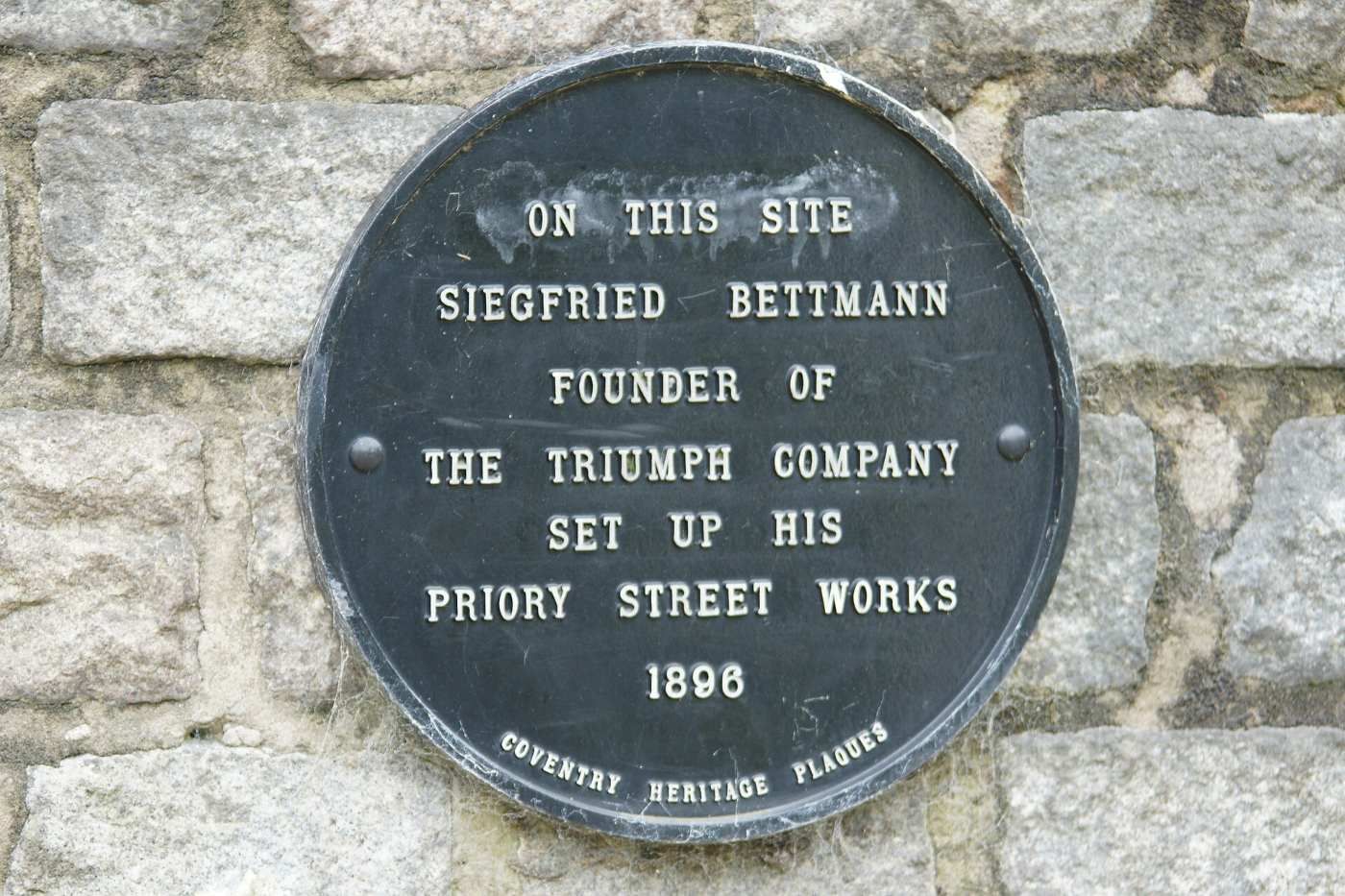
The Coventry Heritage plaque on Priory Street, where Bettmann set up his works. Sashataylor, CC BY-SA 3.0 -
1902 to 1936
Motorcycles
Triumph built its first motorcycle in 1902. In the First World War the British Army ordered the 550 cc Model H in large numbers, and despatch riders nicknamed it the "Trusty Triumph". By 1918 Triumph was Britain's biggest motorcycle maker. In 1936 the motorcycle business was sold to Jack Sangster of Ariel and went its own way.
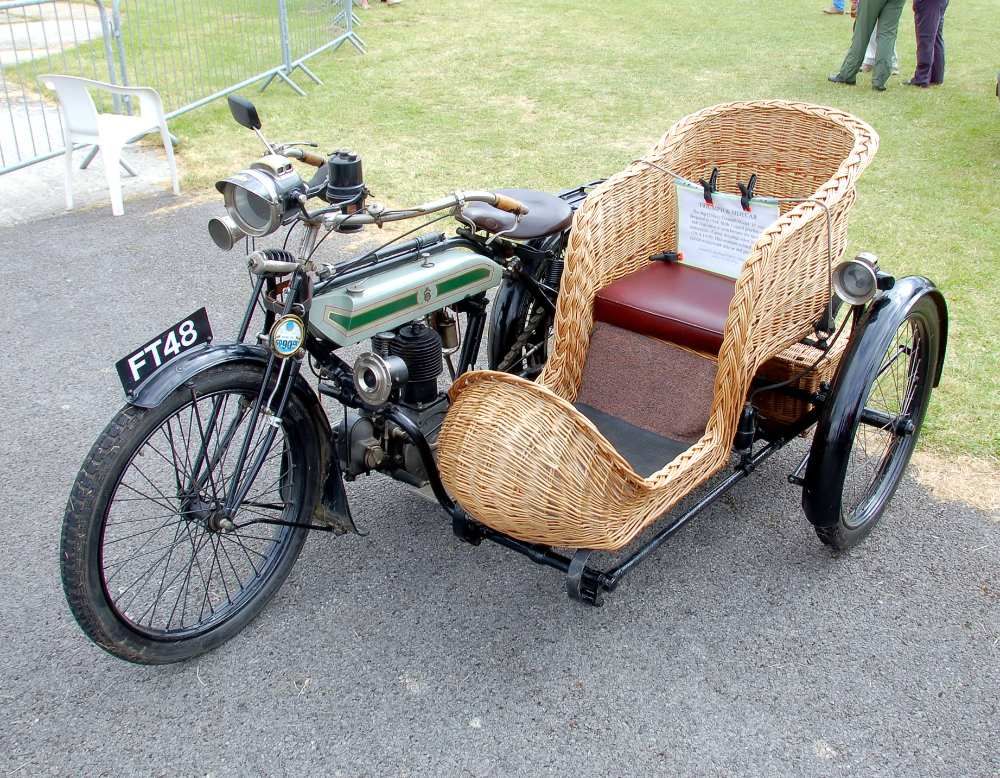
A Triumph Model H from around 1914, here with a wicker sidecar. Arpingstone, public domain -
1921 to 1927
The first cars
In 1921 Bettmann bought the Dawson Car Company's premises, and in 1923 Triumph built its first car, the 10/20. The small Super Seven followed in 1927 and sold well until 1934, and in 1930 the company became the Triumph Motor Company.
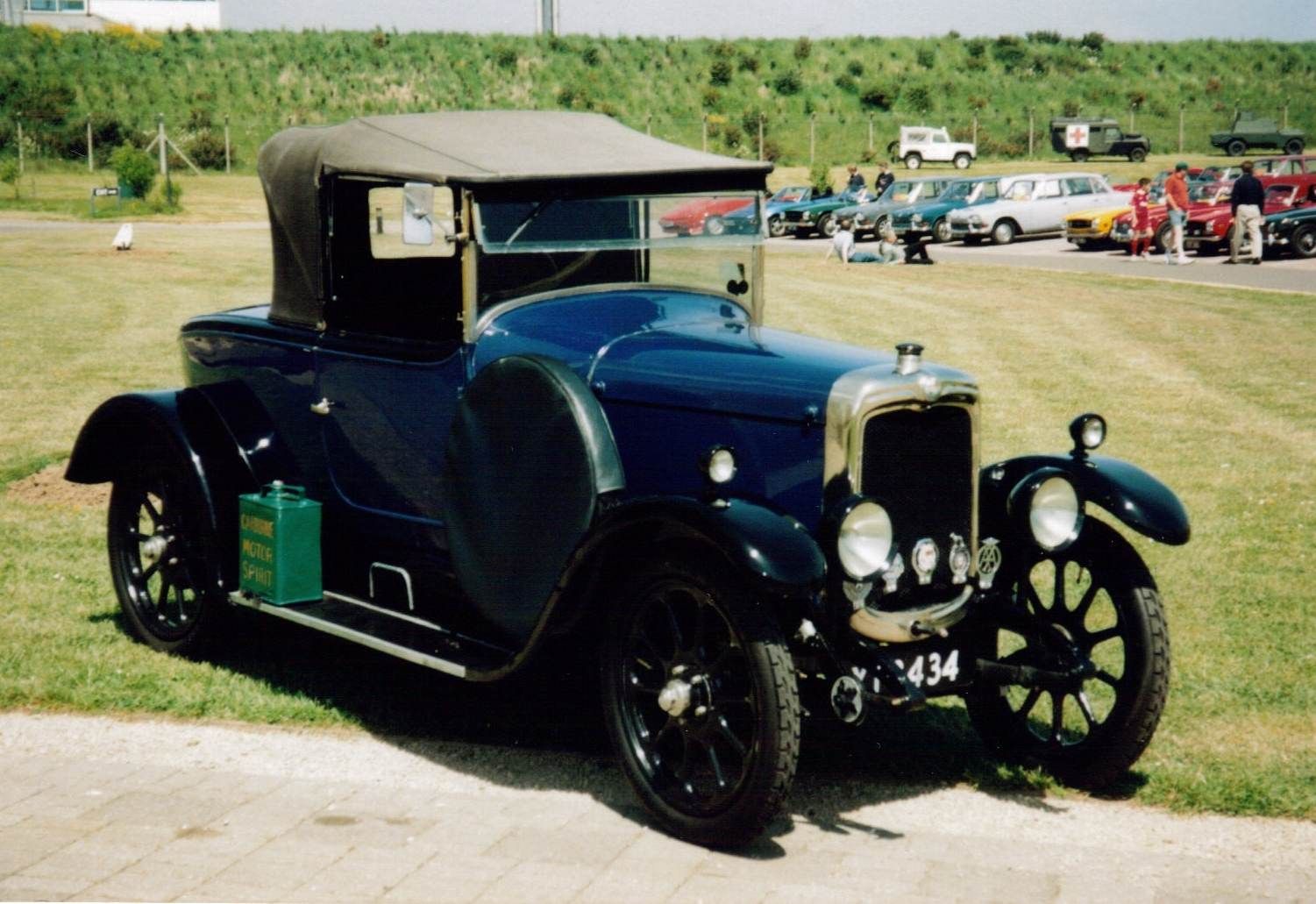
The Triumph 10/20 of 1923, Triumph's first car. FDS2, CC BY-SA 3.0 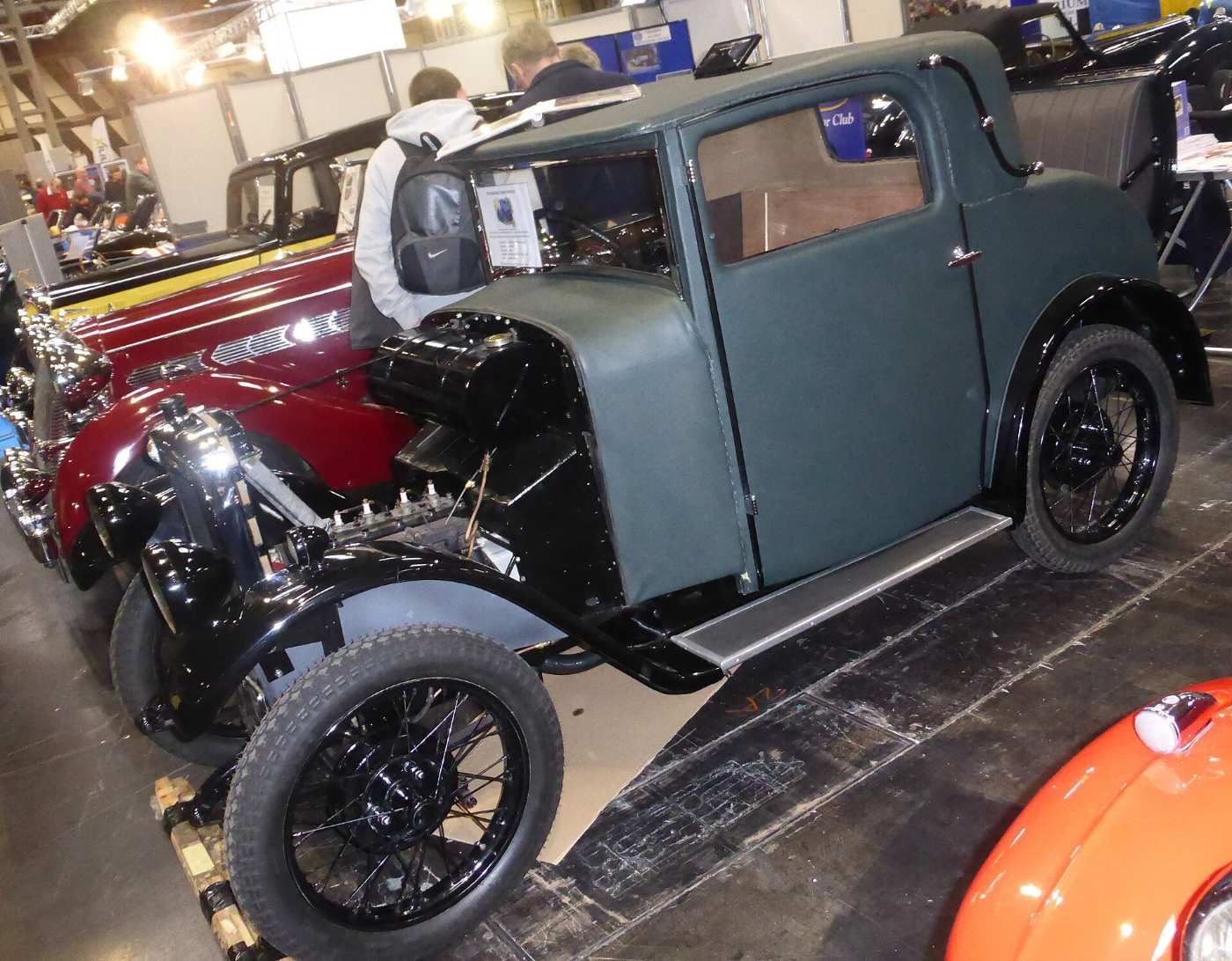
A 1928 Super Seven, Triumph's small car of the late 1920s. Andrew Bone, CC BY 2.0 -
1930s
Gloria and Donald Healey
Through the 1930s Triumph moved upmarket with the Gloria. Donald Healey, later famous for the Austin-Healey, joined in 1933 and became experimental manager in 1934. He took Glorias to class honours in the Monte Carlo Rally and designed the Dolomite Straight Eight, a supercharged twin-cam sports car. Only three were made.
-
1939 to 1944
Receivership and war
Fine cars didn't pay the bills. Triumph went into receivership in July 1939 and was bought by Thos. W. Ward, a Sheffield engineering and scrap firm. The following year the Holbrook Lane works was destroyed in the bombing of Coventry. In November 1944 the Standard Motor Company bought what was left, mainly for the name.
1940
Holbrook Lane works destroyed
1944
Standard buys the name
-
1946
Standard-Triumph
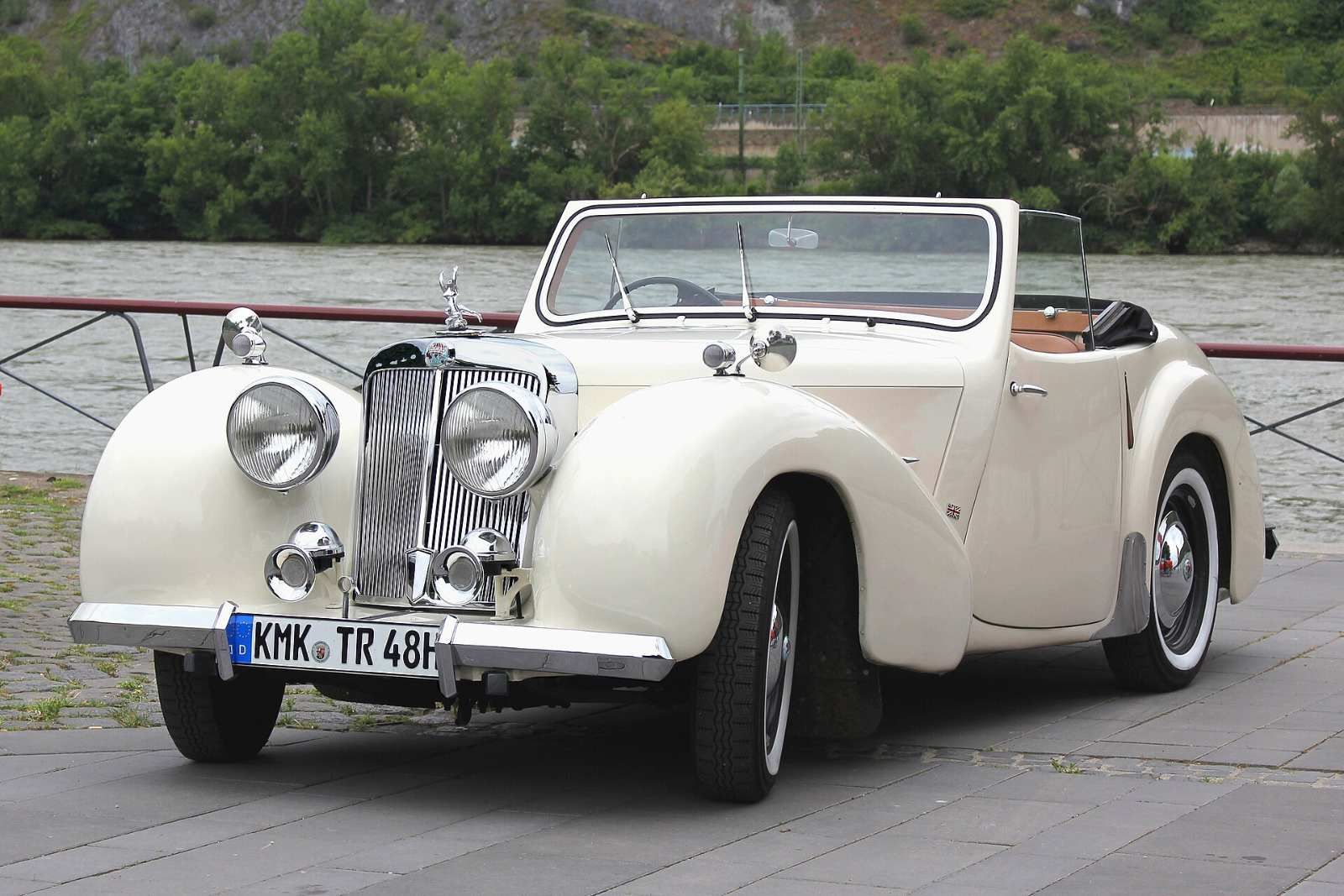
Standard's Sir John Black had supplied engines to William Lyons' SS Cars, later Jaguar, and wanted a sporting marque of his own. The first post-war Triumphs were the 1800 Roadster, with a dickey seat in the tail, and the razor-edged 1800 saloon.
A 1948 Triumph 1800 Roadster, with its dickey seat in the tail. Lothar Spurzem, CC BY-SA 2.0 DE -
1953
The TR2
The TR2 changed everything: cheap, tough, quick and a hit in America. The TR3 followed in 1955, and the TR line carried Triumph's name around the world for nearly three decades.
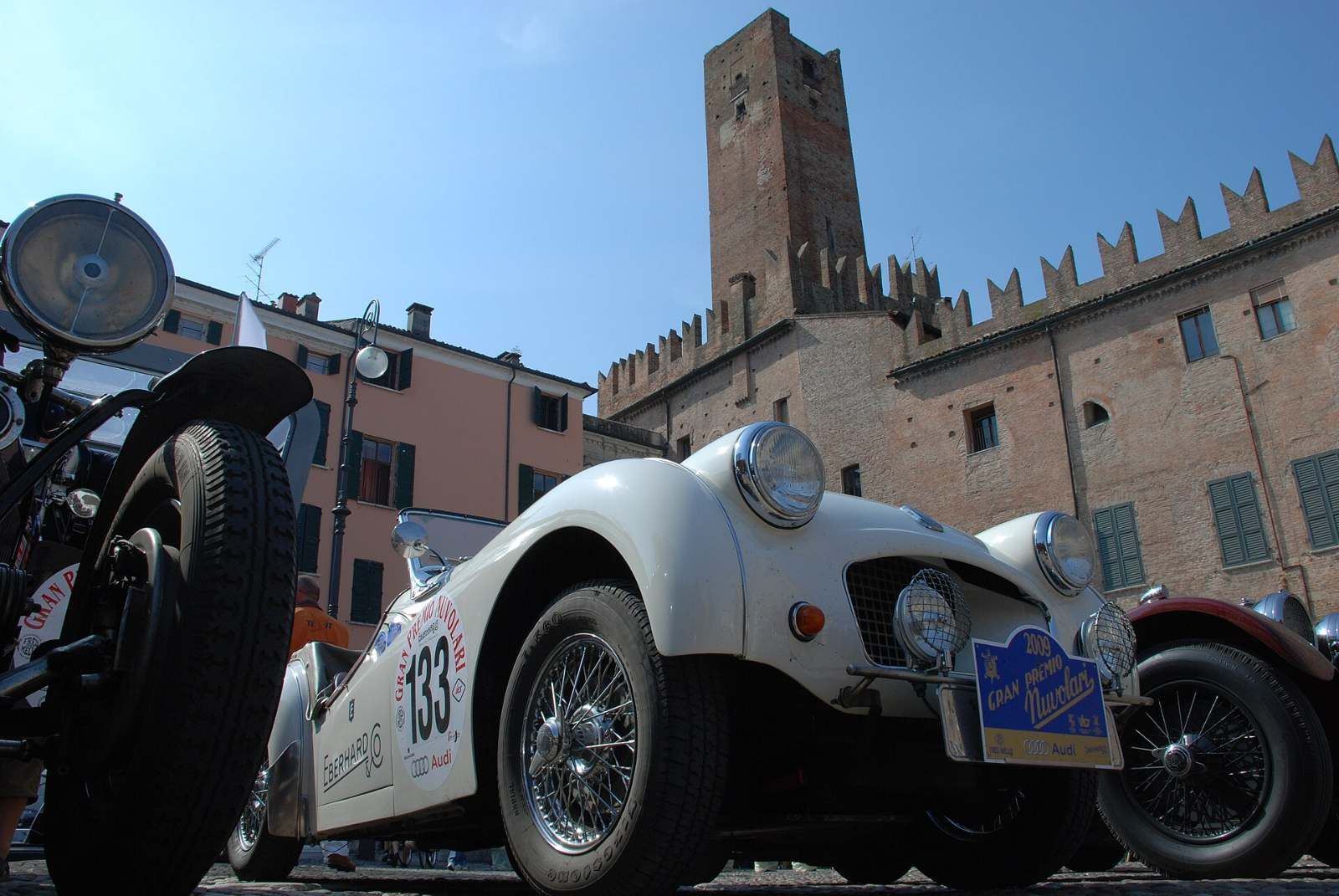
A TR2 on a classic rally. Cheap, tough and quick. GB-Ferrari, CC BY-SA 4.0 -
1959 to 1963
Michelotti's Triumphs
From 1959 the Italian designer Giovanni Michelotti shaped almost every Triumph. The Herald came first, and the Triumph name replaced Standard on the company's family cars. Then came the Spitfire, the TR4, the Vitesse and, in 1963, the Triumph 2000 saloon that the Stag would be built on.
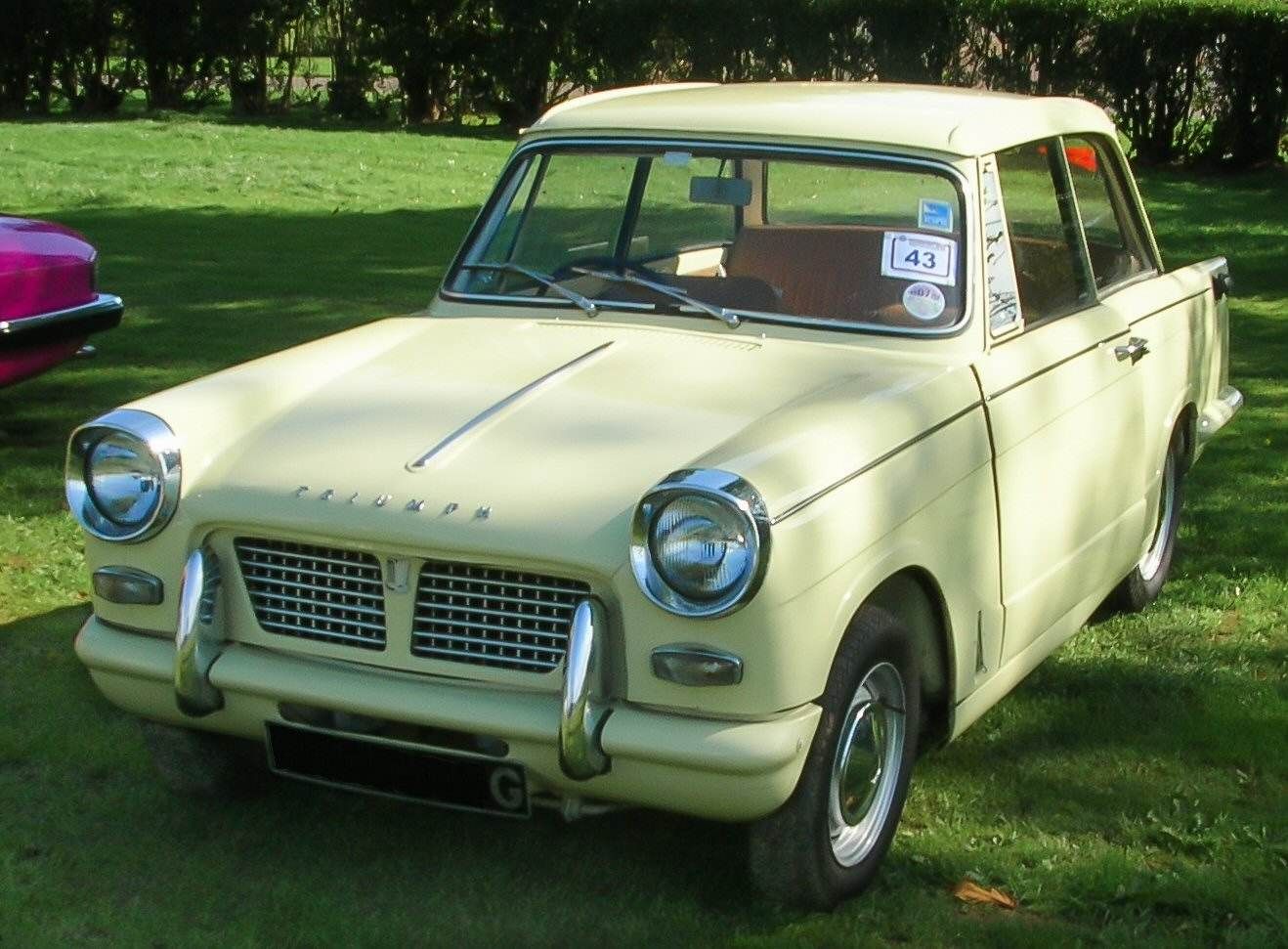
A Herald 1200, the first of Michelotti's Triumphs. DeFacto, CC BY-SA 2.5 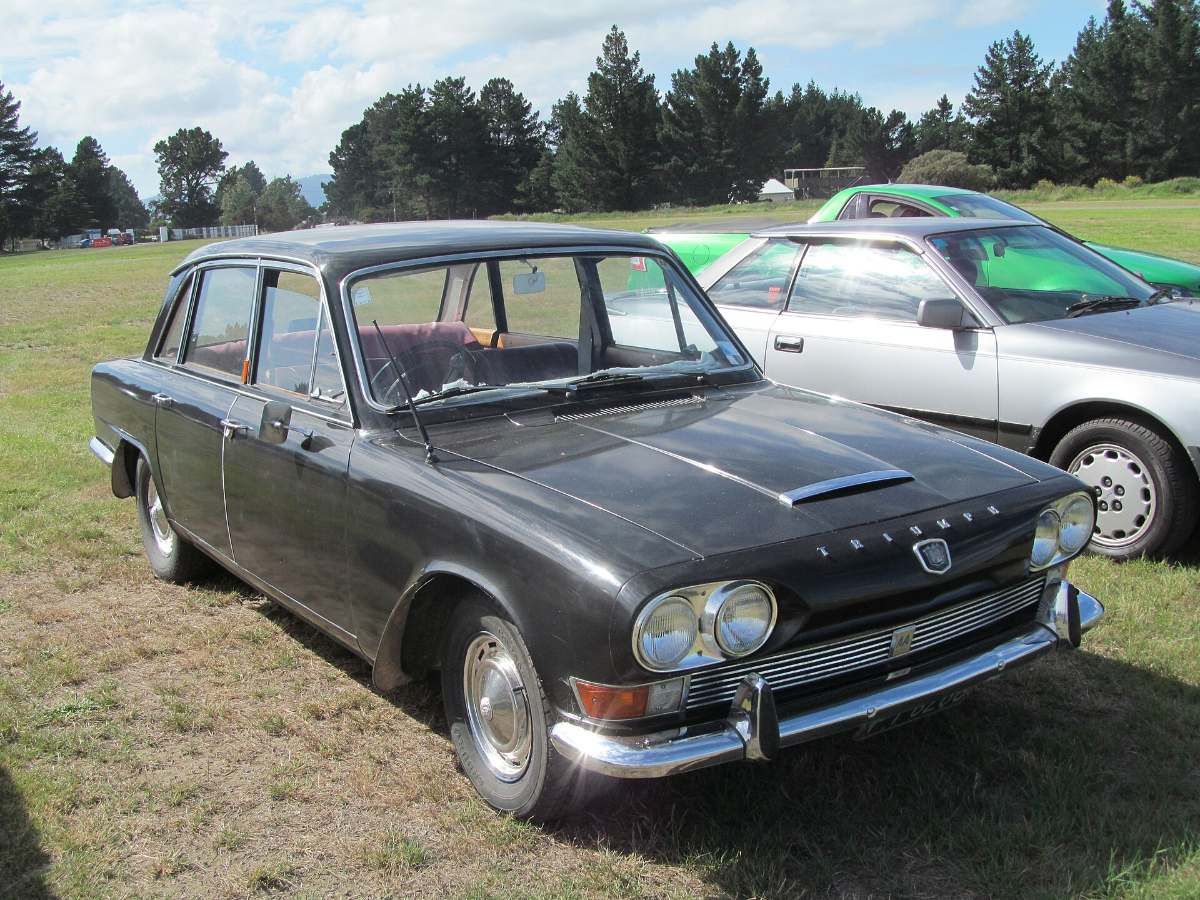
A Triumph 2000 Mk1. The Stag began as one of these, cut down in Turin. Riley from Christchurch, New Zealand, CC BY 2.0 -
1960 to 1968
Leyland and British Leyland
Leyland Motors bought Standard-Triumph in December 1960, and the last Standard car was built in 1963. In 1968 Leyland merged with British Motor Holdings to form British Leyland, putting Triumph alongside Austin, Morris, MG, Rover and Jaguar. That merger is why the Stag's launch slipped and why it kept its own V8.
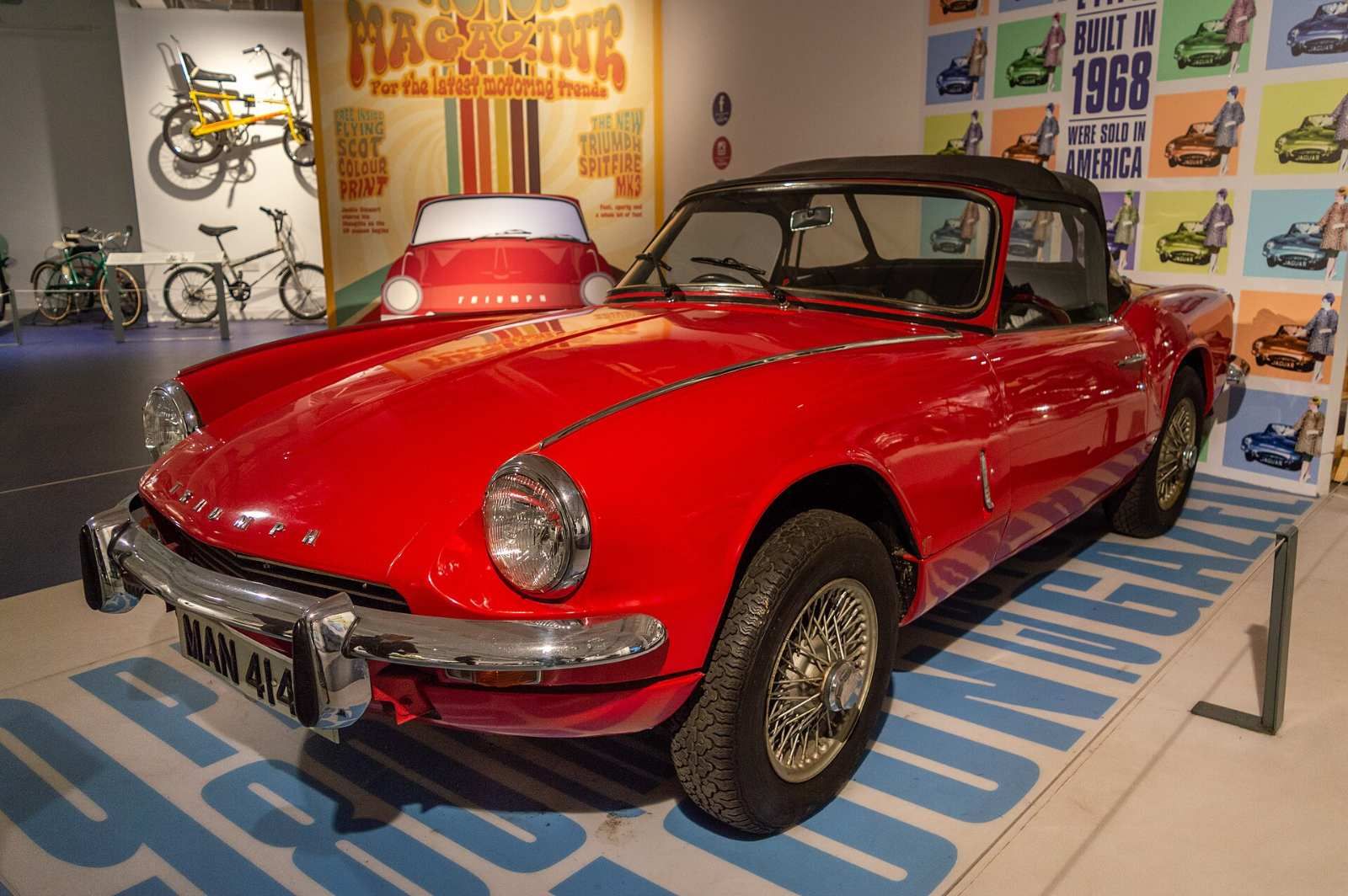
A 1968 Spitfire Mk3 in the Coventry Transport Museum. Tristan Surtel, CC BY-SA 4.0 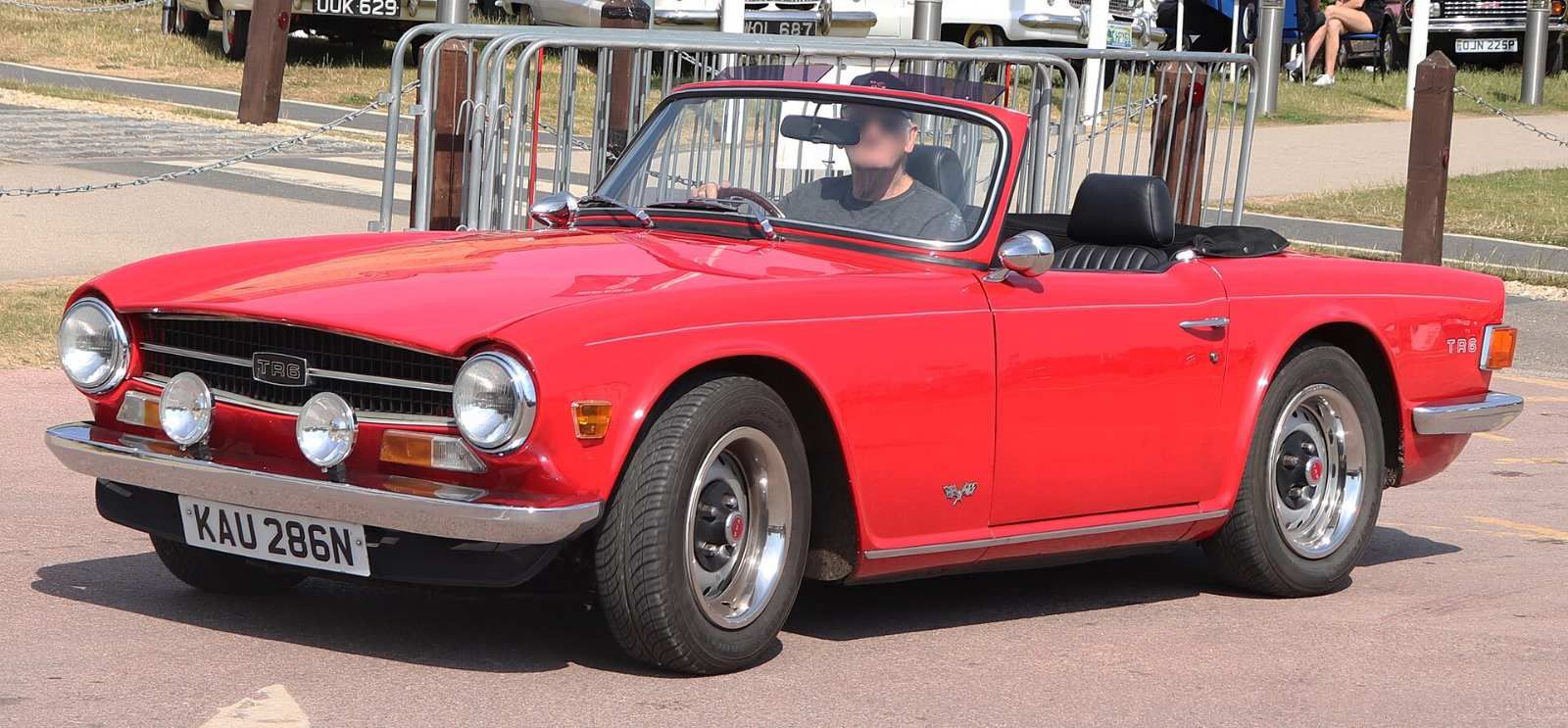
A 1975 TR6 with fuel injection. Vauxford, CC BY-SA 4.0 -
1970s
Stag, Dolomite and TR7
Through the 1970s Triumph built the Stag, the TR6, the Dolomite and Dolomite Sprint, the Spitfire and then the wedge-shaped TR7. Australians saw the Dolomite Sprint race at Bathurst. Strikes, under-investment and British Leyland's troubles took their toll.
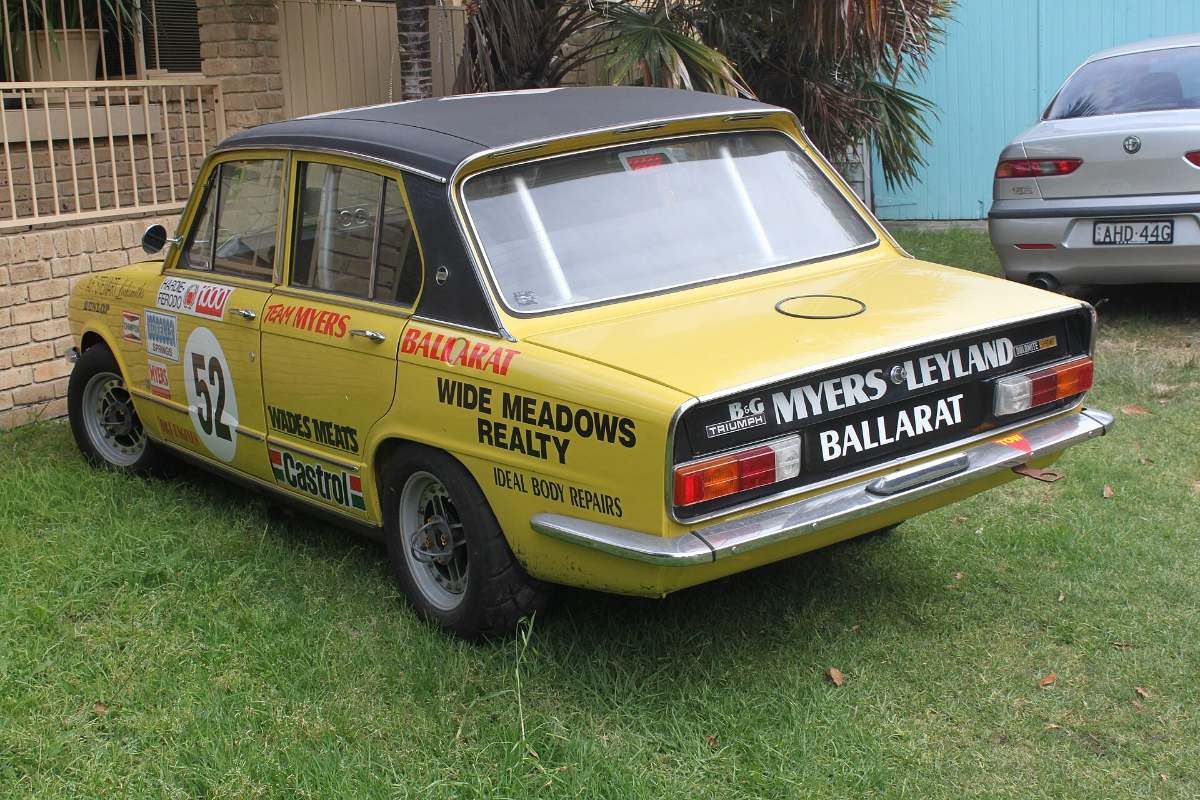
The B&G Myers Leyland Dolomite Sprint, which raced at Bathurst in 1976. Jeremy from Sydney, Australia, CC BY 2.0 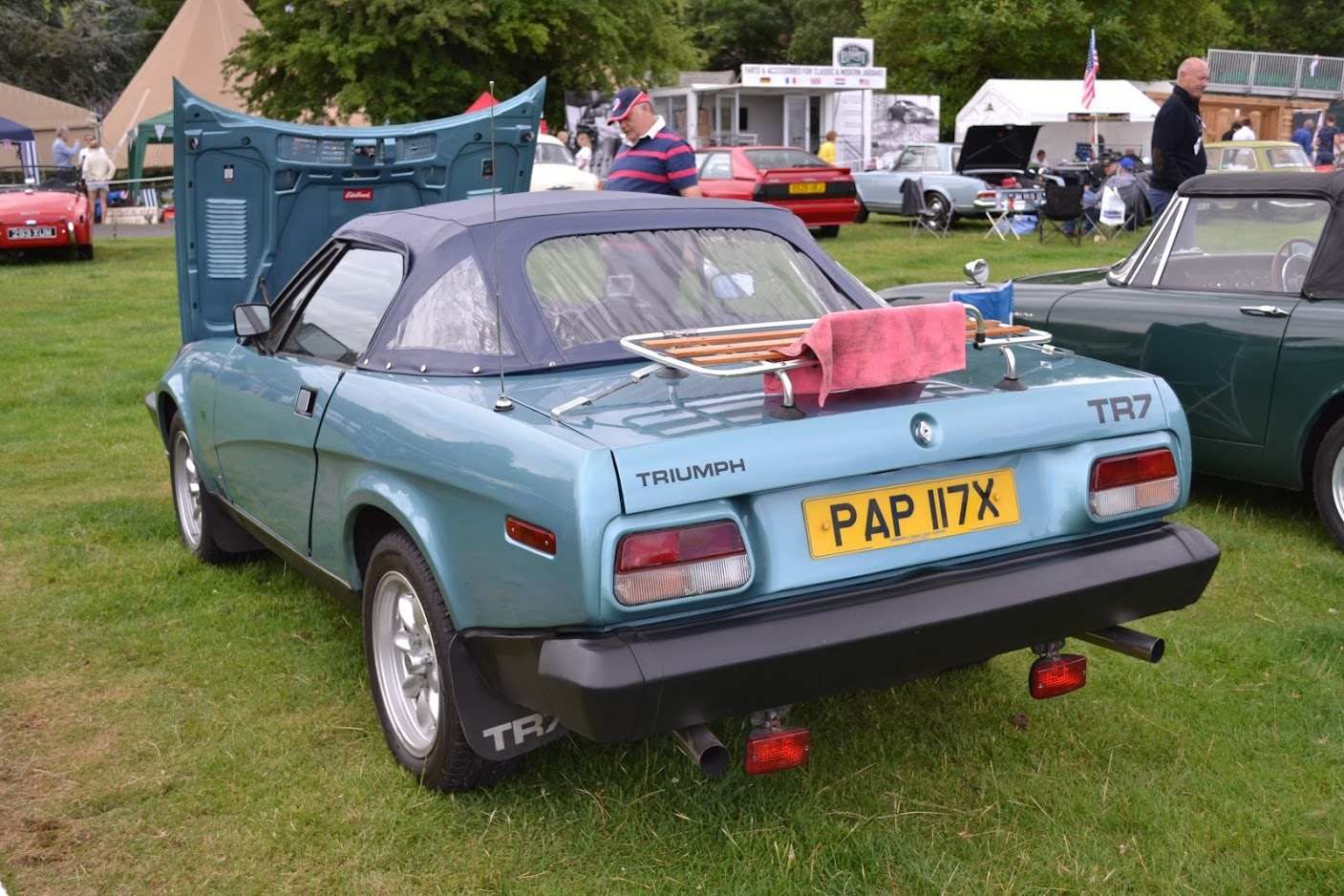
A 1981 TR7, one of the last cars of the TR line. Daniel Milner, CC BY-SA 4.0 -
1980 to 1984
The end of Triumph cars
Coventry's Canley factory closed in 1980 after building the last Spitfire, and TR7 production moved to Solihull before ending in 1981. The last Triumph car, the Honda-based Acclaim, gave way to the Rover 200 in 1984. The Triumph car name passed to BMW when it bought Rover in 1994. The motorcycle business, revived at Hinckley, is still building bikes today.
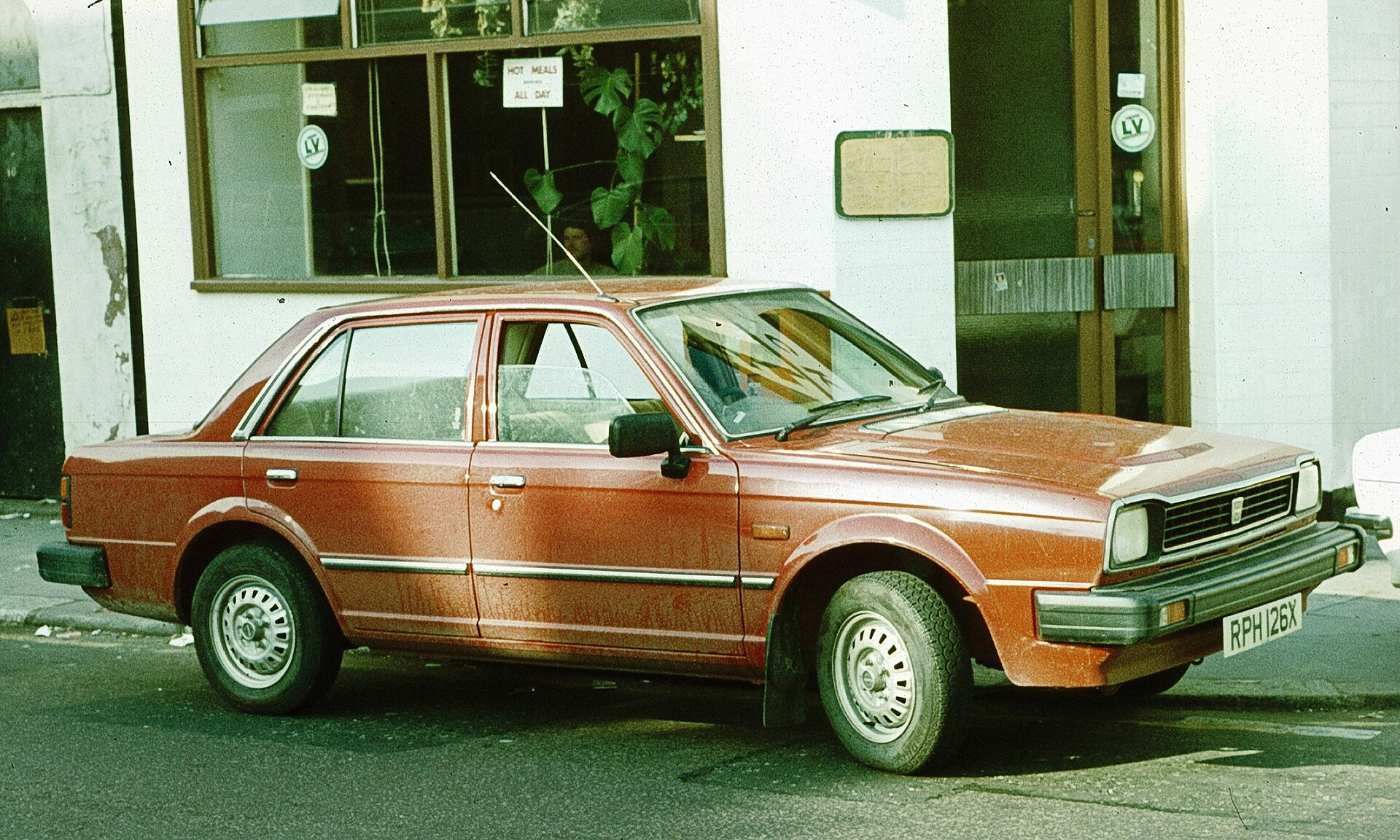
The Honda-based Acclaim, the last car to wear the badge. Charles01, CC BY-SA 3.0
1970 to 1977
And in the middle of it all, the Stag
Michelotti's design, Triumph's own V8, and seven years of production, with bodies from Speke and final assembly at Canley.
Sources Wikipedia's Triumph Motor Company article; the British Motor Museum on the Canley factory. Photos from Wikimedia Commons, credited under each one and used under their Creative Commons licences.